Unlock smarter, faster, and more scalable incident management.
IT teams are under increasing pressure to detect, investigate, and resolve incidents faster than ever. But with siloed data, manual processes, and escalating complexity, teams struggle to keep up, leading to slow resolutions, poor customer experiences, and costly downtime.
Join us and BigPanda where we’ll explore how AI is transforming incident management to accelerate investigations, surface relevant insights, and dynamically scale workflows.
Why attend?
🚨 Siloed data and institutional knowledge make it hard to get a complete picture of incidents.
📉 L1 NOC and service desk teams lack context, leading to unnecessary escalations and slow response times.
🔄 Manual processes and poor communication create inefficiencies, massive bridge calls, and poor documentation.
By attending, you’ll learn how organizations are saving an average of 30 minutes per task during incident investigations.
What you’ll walk away with:
We’ll walk you through real-world use cases and practical strategies to optimize ITSM workflows using AI. You’ll discover how to:
✅ Augment team knowledge – Equip responders with AI-driven insights, including impact assessment, priority scoring, and change risk analysis, so they can resolve incidents faster and more effectively.
✅ Streamline incident processes – Reduce manual, broken workflows by ensuring the right teams are engaged at the right time, improving internal communication and collaboration.
✅ Prevent future incidents – Analyze operational and ITSM data to detect recurring issues, measure gaps, and implement proactive fixes before they escalate.
Hosted by:
Katie Petrillo Senior Director, Product Marketing at BigPanda
As the senior director of product marketing, Katie is an experienced go-to-market leader with a deep understanding of IT Operations, Incident Management, and Cybersecurity markets and buyers. At BigPanda, Katie leads a team of product marketers, and uses customer and market insights to tell compelling stories for customers, prospects, and internal audiences.
Travis Carlson Senior Product Manager – AI Products at BigPanda
Travis Carlson leads product management for AI Products at BigPanda and is known for his ability to quickly study, thoroughly understand, and think critically about extraordinarily complex systems. He’s doing this at BigPanda as he drives the GTM development and release of BigPanda’s generative AI technology, Biggy AI. He’s previously developed products at Cisco and VMware, and has an MBA from MIT.
In 2025, adapting, refining and pivoting strategies will not be a matter of choice, but rather a necessity for survival and expansion for companies. Spending on technologies that support digital transformation is expected to reach 3.9 trillion dollars by 2027.
The figure shows the continued increasing effort by companies in this field. The road ahead is not simple, however, studies indicate that almost 70% of digital transformation endeavors fail due to mismanagement, unsupporting corporate culture, and vague goals.
Take the example of General Electric (GE). Once regarded as an industrial innovations leader, GE pursued a strategy of investing heavily into a digital unit with the hopes of transforming its operations and products. The project turned out to be underwhelming as a result of overly optimistic demand forecasts and internal pushback, and serves as a story of what not to do for other businesses with similar objectives.
Getting your digital transformation strategy right can lead businesses towards endless possibilities and provide a competitive advantage. Adopting a digital transformation strategy is not the challenge, rather mastering it is.
Formulating digital transformation framework to achieve competitive advantage
In simple terms, digital transformation can be described as the integration of digital technologies in every aspect of a business.
This includes the modification of business processes and the manner in which value is provided to clients. Does this enhance competitive advantage? When done effectively, it enables companies to gain the following benefits:
Operational excellence: Companies can use digital tools and platforms to automate the workflows, minimize unnecessary processes and increase productivity, thus improving operational effectiveness.
Improved customers’ lifetime value (CLV): Digital and personalized customer interactions, along with extensive data analytics, help foster strong customer relationships, increase customer satisfaction, and consequently boost profitability in the longer run.
Being the first to market: The adoption of groundbreaking digital solutions permits companies to claim a portion of the market and establish themselves as industry leaders at the same time.
For organisations to digitally transform efficiently, they can leverage pre-existing models, such as the McKinsey 7S Model. This model focuses on seven interrelated elements Strategy, Structure, Systems, Shared Values, Skills, Style, and Staff which help ensure alignment in the processes of transformation.
With the assessment and realignment of these components, businesses can develop an infrastructure that facilitates digital embedding.
Furthermore, the MIT Sloan Digital Business Model framework offers important analyses by investigating the rebalancing of important relationships: Minds and Machines, Products and Platforms, and the Core and the Crowd. This strategy helps the reconfiguration of a company’s primary strategies to make the most out of the digital economy.
As the digital world advances, no industry leader will dispute that for one to be competitive, the core of business strategy has to be based on digital transformation. Essentially, as McKinsey & Company noted, to succeed in digital transformation one has to make trade off decisions that will aid in the reinvention of the business.
Alleviating the complexity of digital transformation is possible when these frameworks and insights are adhered to, in turn facilitating the fostering of sustainable competitive advantage alongside the growing digital landscape.
Many businesses now utilize AI for productivity growth. For example, AI is applied in writing codes, composing content, and even doing workflow management which tremendously increases efficiency.
Companies that have AI integrated into their systems report a ROI that is almost 2 times higher than those who apply AI platforms for specific tasks and functions only. Moreover, 92% of large companies report achieving returns on their deep learning and AI investments.
Real life example
The emergence of DeepSeek, a Chinese AI startup, marked a major turn in the AI scene with its advanced open-source AI model called R1. This model competes with the best in reasoning from OpenAI and Google but at a much lower cost.
DeepSeek trained their R1 for under $6 million, using 2,000 less powerful chips instead of the tens of thousands of specialised chips that would cost around $100 million. The launch of DeepSeek’s R1 has caused established AI companies in Silicon Valley to revise their plans since it indicates a movement from a focus on raw power to one of reasoning and optimization.
In addition, the fact that the model is open source means that any researcher in the world can examine its architecture and build on it, making a more collaborative approach to AI.
Challenges faced
Most companies find it challenging to determine the ROI on AI spending with only 31% of leaders expecting to be able to measure ROI in 6 months.
Emerging patterns
The increased affordability of AI is shifting investments from hardware to software which is positive for companies such as Salesforce and Microsoft.
Expansion of cloud services
Strategy case
Companies are developing their capabilities in cloud services to enhance their flexibility and scalability. Around 45% of companies are upgrading their cloud infrastructure to facilitate the transformation process.
Metrics
Europe’s largest software company, SAP expects its cloud revenues to be between 21.6 bln euros and 21.9 bln euros in 2025 which will increase further due to the growth of cloud computing.
Real-life example
Airbnb uses cloud services to manage peak demand during holiday seasons by enabling “on-the-fly” scaling of infrastructure for high resource consuming events like Black Friday.
Challenges faced
Cloud cost management is a pain point for 82% of cloud decision makers.
Emerging patterns
People want more sustainable features in cloud services, which are often overlooked.
According to IoT Analytics’ 418-page IoT Use Case Adoption Report 2024, IoT initiatives appear more successful than ever, as 92% of enterprises report positive ROI from IoT use case implementations.
Metrics
Various studies predict significant growth in IoT, particularly in industries where IoT can help save operational costs by more than 10-20%.
Real-world example
IoT has been used in environmental conservation through advanced sensing methods that promote monitoring and the protection of forest ecosystems. Advanced sensing technologies allow for a notable real world application of IoT.
Devices have gotten smaller and smarter, becoming much more interconnected in the process, transforming data collection to even the most harsh of conditions. Innovations such as Dryad Networks’ wildfire sensors that detect preemptive signs of a fire, Treevia’s digitized dendrometers for tree growth monitoring, and Rainforest Connection’s illegal activity and wildlife monitoring smartphone powered devices are great examples.
Such technologies like Switzerland’s eDNA-collecting drones, Freiburg University’s leaves sensors, Plant-e’s bacteria powered sensors, and seed dropping drones revolutionize forest conservation efforts by providing critical insight and reforestation.
Challenges faced
Protecting the data and the underlying integration issues remain challenges for IoT implementation.
Emerging patternsand
In 2023, the IoT integration market was predicted to be worth USD 3.83 bln, with an anticipated CAGR growth rate of 28.3% between 2024 and 2030.
This growth can be attributed to the rising number of connected devices, smart cities, advancements in AI and ML, a greater emphasis on cybersecurity, and the growing popularity and capabilities of edge computing.
Furthermore, the stronger focus on data-based decision-making is driving investment expansion, which is further aiding the growth of value from IoT platforms. These platforms enable businesses to collect data and provide analysis and visualization tools, permitting real-time decision-making.
The coming years are expected to provide further tailwinds to growth, enabling IoT’s full potential.
Generative AI can help with content creation
Strategy Case
The integration of AI within branding initiatives has automated the creation of effective marketing material like videos, images, and text which improves marketing and communications strategies.
Metrics
92% of Fortune 500 firms have adopted the technology, including major brands like Coca-Cola, Walmart, Apple, General Electric, and Amazon.
Real life example
A mid-sized tech company in Denver, six months after fully adopting AIContentPad, produced30% more content at 62% less cost, and engagement doubled across key sales channel platforms.
Challenges faced
The inability of Generative AI to produce high quality content and preserving the brand voice are problems that are worth mentioning.
Emerging patterns
There is an increasing trend to deploy Generative AI with customisation to build multiple experiences for single AI model targets.
Digital twin technology
Strategy case
Currently, the engineering and manufacturing sectors primarily use Digital Twins as accurate virtual representations of an object or process simulation. Several publications examine the application of Digital Twins in operational and supply chain management, emphasizing the functions of operations tracking, transport servicing, remote support, asset seeing, and customized design.
Metrics
Organisations that have adopted digital twins have said that the time taken for designing processes was reduced by 30%. They also mention a 25% reduction in expenses related to system upkeep.
Real life example
Altum RF advanced the design of new semiconductor components through the use of a digital twin which enabled them to reduce the design process by 30%.
Challenges faced
The implementation of digital twins will need a considerable initial investment as well as difficulties with data processing from old systems.
Emerging patterns
Progressive cities are increasingly using digital twins for planning as a way to create a simulated city and effectively manage infrastructure and resources. Also, McKinsey research indicates the global market for digital-twin technology will grow about 60% annually over the next five years, reaching $73.5 billion by 2027.
RPA is considered a developing technology that can speed up business procedures by automating mundane and demanding tasks within the supply chain systems. RPA is also known as software robotics or ‘bots’ and is designed to follow instructions provided by the users in order to execute repetitive tasks in business organisations.
Metrics
Companies that have adopted RPA have achieved process time reduction of up to 80% and a decrease in operational costs by 10%-20%.
Real-world example
New Mexico Mutual incorporated RPA and saved 3.5 hours per day from redundant tasks, which allowed employees to focus on critical higher-value activities.
Challenges
Adaptation of RPA can present issues such as lack of standardization for the processes being automated and opposition from employees fearing job loss.
Emerging patterns
The use of RPA on its own is sufficient, however, we have seen a growth in the combining of AI with RPA to create more advanced automation that is capable of making complex decisions.
What’s next?
It’s expected that the merger of AI technologies and 5G by 2025 will radically compress the developmental timeline of digital transformation efforts. Generative AI’s ability to automate the process of content creation will allow firms to facilitate marketing, product design, and customer relations on completely different levels.
Consequently, productivity is expected to rise by at least 20% for companies that embrace these tools. Moreover, customer retention rates have the potential to rise up to 15% due to the use of hyper personalization techniques powered by increased data analytics to provide tailored customer experiences.
Adoption of 5G is expected to improve the connectivity of multiple sectors including healthcare, transportation, manufacturing, and more, enabling real-time data collection and analysis through IoT devices.
This, in conjunction with IoT, 5G is set to increase connectivity and make operations more data-centric. As a result, not only will operational efficiency increase, but more innovative developments like smart cities and self-driving cars will become a reality.
Adopting these advancements is expected to increase operational efficiency by 30%, providing a sustainable competitive advantage in this rapidly changing digital world.
China’s recently unveiled AI agent, Manus, represents a significant leap forward. Introduced by the Chinese startup Monica, Manus is described as a fully autonomous AI agent capable of handling a wide range of tasks with minimal human intervention.
Since its launch on March 6, 2025, Manus has attracted considerable global attention, sparking discussions about its technological implications, ethical considerations, and potential impact on the AI landscape. This article explores what makes Manus unique, examines the perspectives of its supporters and critics, and considers the broader implications of its development.
The emergence of Manus
Manus differs from conventional AI systems’ ability to independently plan, execute, and complete tasks without constant human supervision. The agent can analyze financial transactions, screen job applicants, and even create websites—all in real-time.
Unlike traditional AI models that rely on pre-programmed inputs or human oversight, Manus learns from user interactions and adapts its approach to achieve its goals. Its creators have positioned it as a competitor to systems from global leaders such as OpenAI and Google.
Manus stands out for its advanced autonomous capabilities, which allow it to handle complex workflows and provide real-time outputs without user intervention. By integrating these features, it opens new doors for automation in industries like:
Human resources:In recruitment, Manus can autonomously screen resumes, evaluate candidate skills, and rank applicants, streamlining the hiring process and reducing human bias.
Real estate: Manus can assess real estate affordability, analyze market trends, and provide personalized property recommendations, enhancing buyers’ and investors’ decision-making.
These applications demonstrate Manus’s potential to set new benchmarks for autonomous AI, offering efficiency and precision in complex workflows.
Perspectives on Manus
Supporters’s views
Supporters argue that Manus could revolutionize industries by significantly improving efficiency and productivity. With its ability to process information and make decisions autonomously, supporters see it as a tool that could reduce costs, streamline operations, and drive innovation.
They highlight the agent’s potential to tackle repetitive tasks, allowing human workers to focus on higher-level, creative endeavors.
Critics’ concerns
On the other hand, critics caution against the ethical and societal risks posed by fully autonomous AI agents. Privacy advocates worry about the potential misuse of Manus’s capabilities, mainly when dealing with sensitive data.
Additionally, concerns about job displacement loom, with some fearing that Manus could render specific roles obsolete. These critics call for more robust regulatory frameworks and transparent mechanisms to ensure accountability.
Global observers’ opinion
Internationally, Manus is seen as a symbol of China’s growing AI prowess. Observers have compared it to leading AI initiatives from companies like OpenAI and Google, noting that Manus’s launch could heighten global competition in the autonomous AI space.
This international attention underscores how pivotal Manus’s development could be in shaping future AI standards and benchmarks.
The emergence of Manus raises critical ethical questions.
How should regulators oversee systems that operate without direct human guidance? What safeguards are needed to ensure that these agents act responsibly and transparently? Current regulatory frameworks are not yet equipped to address the challenges of fully autonomous agents.
To maintain public trust and safety, policymakers must consider new approaches, such as mandatory audits, continuous performance monitoring, and stricter data protection standards.
Autonomy and accountability: Determining responsibility for the actions of autonomous agents like Manus is complex, especially when decisions lead to unintended consequences.
Privacy concerns: Manus’s ability to process vast amounts of data autonomously raises questions about data privacy and the potential for misuse.
Employment impact: Automating complex tasks traditionally performed by humans could lead to job displacement, necessitating discussions on workforce adaptation and reskilling.
The future of Manus and autonomous AI
Manus’s development could inspire a new wave of autonomous AI agents that redefine industries and reshape societal norms. In the coming years, we may see broader deployment of Manus’s capabilities, potential enhancements that increase its utility, and more companies entering the autonomous agent space.
However, this growth must be accompanied by robust policy frameworks and collaborative efforts among global stakeholders to ensure these systems are developed and deployed responsibly.
China’s AI agent Manus represents a significant milestone in autonomous intelligence, blending advanced technology with unprecedented autonomy. By examining its development, technological implications, and the wide range of perspectives it has generated, readers can gain a clear understanding of Manus’s significance in the AI landscape.
As we navigate the challenges and opportunities presented by such advancements, it is crucial to foster an informed dialogue that ensures autonomous AI serves as a force for progress, not harm.
Agentic AI refers to artificial intelligence systems that act autonomously, make decisions, set goals, and adapt to their environment with minimal human intervention. Unlike traditional AI, which follows predefined instructions, agentic AI continuously learns, reasons, and refines its actions to achieve specific objectives.
This type of AI moves beyond simple automation. Traditional AI models rely on predefined rules and patterns, executing tasks within strict boundaries. In contrast, agentic AI exhibits problem-solving capabilities, proactively adjusting its behavior based on new inputs, unexpected changes, or emerging patterns. It functions more like an independent entity than a programmed tool.
Agentic AI is modeled on human-like intelligence, meaning it doesn’t just respond to commands but can initiate actions independently. This includes setting intermediate goals, prioritizing tasks, and iterating on previous efforts to improve results. It can navigate uncertainty, make real-time adjustments, and optimize decisions without constant human oversight.
What sets agentic AI apart is its ability to self-direct. It doesn’t require explicit step-by-step instructions for every scenario—it learns from experience, understands context, and makes informed choices to achieve its objectives. This makes it particularly valuable in dynamic environments with insufficient predefined rules.
Examples of agentic AI include self-driving cars that adapt to unpredictable traffic conditions, AI-powered research assistants that generate and test scientific hypotheses, and autonomous trading systems that make investment decisions based on real-time market shifts. These systems don’t just follow orders; they work toward goals, improving over time through continuous feedback loops.
As AI evolves, agentic capabilities will become increasingly prevalent, shaping industries by enabling machines to take on more complex, independent roles that previously required human intelligence.
Agentic AI operates independently, determining the best action based on the data it gathers. It can analyze complex situations, weigh options, and choose paths optimizing efficiency, performance, or any given metric.
Unlike traditional AI, which relies on human input at every stage, agentic AI continuously assesses and adjusts its approach to maximize effectiveness. This autonomy enables it to function in unpredictable environments, making it a crucial tool for logistics, finance, and healthcare industries.
Goal-oriented behavior
Unlike static AI models that follow rigid instructions, agentic AI defines its sub-goals in pursuit of broader objectives. It can break down significant problems into manageable steps, pivot strategies when necessary, and prioritize actions based on real-time feedback.
By dynamically setting and adjusting goals, agentic AI can handle complex decision-making tasks, such as optimizing supply chains, managing large-scale data analysis, or improving automated customer service interactions.
Self-learning and adaptability
Agentic AI continuously improves by learning from its own experiences. Using reinforcement learning, fine-tuning techniques, or human feedback, it adapts to new challenges and refines its decision-making.
Unlike traditional AI models that require constant updates from developers, agentic AI identifies inefficiencies and self-corrects. This adaptability allows it to excel in fast-changing environments like financial markets, cybersecurity threat detection, and personalized marketing campaigns.
Context awareness
Understanding context is crucial for agentic AI. Whether analyzing user interactions, external data, or real-time environmental inputs, it adjusts its responses accordingly, making it more effective in real-world applications.
For example, an AI-driven medical assistant can interpret patients’ symptoms within the broader context of their medical history, lifestyle, and genetic factors, allowing for more accurate diagnoses.
Similarly, an autonomous vehicle must process road conditions, traffic patterns, and unexpected obstacles to make split-second decisions that ensure safety.
Collaboration with humans and other AI systems
Rather than operating in isolation, agentic AI can collaborate with humans and other AI systems. It interprets human intent, takes feedback, and delegates tasks when necessary.
This characteristic is especially valuable in workplace automation, where AI can enhance human decision-making rather than replace it. For instance, AI-powered project management tools can anticipate deadlines, allocate resources efficiently, and suggest workflow improvements while keeping human stakeholders in control.
Multiple AI agents can communicate and coordinate actions in collaborative AI ecosystems, improving logistics, manufacturing, and scientific research efficiency.
How agentic AI works
1. Perception and data collection
Agentic AI gathers data from multiple sources, including sensors, databases, APIs, and user interactions. This continuous stream of information feeds its decision-making process.
The more diverse and high-quality the data, the more effective the AI becomes. These systems use natural language processing (NLP), computer vision, and data mining techniques to extract meaningful insights and detect patterns from structured and unstructured data.
2. Reasoning and planning
The AI uses advanced algorithms to evaluate available data and map actions to achieve its goals. This step involves predictive modeling, scenario analysis, and strategic decision-making.
Unlike reactive AI, which merely responds to inputs, agentic AI develops a forward-looking strategy. It can simulate potential future scenarios, weigh risks, and optimize for long-term success.
This reasoning process allows it to perform complex problem-solving tasks, such as diagnosing a medical condition, optimizing financial investments, or managing logistics in supply chain networks.
3. Execution and action
Once a plan is formed, the AI system executes actions—whether automating a process, making recommendations, or interacting with humans. Agentic AI can operate across multiple platforms and interfaces, integrating seamlessly with business workflows, robotic systems, and software applications.
For example, in an industrial setting, an AI-powered manufacturing system can adjust machinery parameters in real-time to optimize production efficiency and minimize waste. In digital marketing, an AI-driven content management system can autonomously generate and distribute personalized campaigns tailored to user engagement metrics.
4. Feedback and iteration
Every action feeds new data into the system, allowing the AI to refine future decisions. This iterative loop enables continuous improvement. The AI detects patterns in its successes and failures, tweaking its strategies accordingly.
Reinforcement learning models help the AI optimize its behavior over time, ensuring better outcomes with each iteration. This feedback loop makes agentic AI systems highly adaptive, enabling them to evolve with changing conditions. In cybersecurity, for instance, agentic AI can analyze past threats and proactively develop countermeasures before new attacks occur.
Self-driving cars, robotic process automation (RPA), and smart drones leverage agentic AI to make real-time decisions and operate with minimal human oversight.
These systems use AI to analyze their surroundings, predict possible obstacles, and dynamically adjust their actions to ensure efficiency and safety. For example, autonomous drones in agriculture can monitor crop health and apply fertilizers only where needed, optimizing resource use.
Customer support and chatbots
AI-driven chatbots go beyond scripted responses. They analyze user queries, determine intent, and personalize interactions based on prior conversations and learned behaviors.
Modern agentic chatbots can troubleshoot problems, suggest solutions, and even escalate issues to human representatives when necessary. Some can handle entire customer service processes, such as refund requests and product recommendations, without human intervention.
Healthcare and diagnostics
AI agents assist in diagnosing diseases, recommending treatments, and even autonomously conduct research by analyzing vast medical records and scientific literature datasets.
Agentic AI in healthcare can monitor patients in real time, predicting potential complications before they arise. For example, AI-powered wearable devices track vital signs and alert doctors to early signs of heart disease or diabetes.
Finance and trading
Algorithmic trading, fraud detection, and personalized financial recommendations benefit from agentic AI, which monitors markets and adapts trading strategies accordingly.
Hedge funds and investment firms use agentic AI to process market data at lightning speed, making split-second trading decisions based on real-time financial trends. In fraud prevention, AI systems detect unusual transactions and flag potential risks before money is lost.
Personal assistants
Voice assistants like Siri, Alexa, and Google Assistant are becoming more agentic by predicting user needs, automating tasks, and integrating with smart home devices. They are evolving into proactive assistants that respond to commands and anticipate user needs.
For instance, an AI assistant could schedule meetings based on past behavior, adjust a smart thermostat according to weather forecasts, or automatically reorder groceries when supplies run low.
Scientific discovery and research
AI-driven research tools help scientists analyze massive datasets, formulate hypotheses, and generate new physics, chemistry, and biology theories. In drug discovery, agentic AI accelerates the identification of new compounds by simulating millions of molecular interactions in a fraction of the time traditional methods require.
In physics, chemistry, and biology theories, autonomous AI agents on rovers analyze planetary conditions, adjust exploration paths, and make scientific discoveries without waiting for instructions from Earth.
Manufacturing and supply chain optimization
Manufacturing processes increasingly rely on agentic AI to optimize workflows, reduce waste, and increase efficiency. AI-driven robotics adjust production speeds, detect defects, and predict maintenance needs, preventing costly downtime.
In supply chain management, AI agents track global logistics, anticipate disruptions, and reroute shipments automatically, ensuring smooth operations despite unforeseen challenges.
Cybersecurity and threat detection
With cyber threats growing more sophisticated, agentic AI plays a crucial role in real-time threat detection and response. AI systems monitor network activity, identify anomalies, and autonomously neutralize potential threats before they escalate.
Unlike traditional cybersecurity measures, which rely on predefined rules, agentic AI continuously learns from attack patterns and adapts defenses dynamically.
Challenges and ethical considerations
Control and oversight
Autonomous AI systems need guardrails to prevent unintended consequences. Defining clear boundaries and monitoring their actions ensures alignment with human interests.
Without proper oversight, agentic AI could take unpredictable or harmful actions. Regulatory frameworks, safety protocols, and human-in-the-loop designs must be implemented to mitigate risks.
Bias and fairness
AI learns from data, and biased training data can lead to skewed decision-making. Ethical AI development requires rigorous testing and mitigation strategies to ensure fairness.
Bias in AI systems can perpetuate or even amplify societal inequalities, particularly in hiring, lending, and law enforcement applications. Developers must prioritize diverse and representative datasets and implement fairness audits to prevent discriminatory outcomes.
Security risks
Highly autonomous AI systems are attractive targets for cyberattacks. Ensuring robust security measures is crucial to prevent AI manipulation and unauthorized access.
Malicious actors could exploit agentic AI for financial fraud, disinformation campaigns, or even autonomous cyber warfare. Strong encryption, continuous monitoring, and adversarial testing are necessary to protect AI-driven systems from attacks.
Transparency and accountability
Understanding how agentic AI makes decisions is critical, especially in high-stakes domains like healthcare and finance. Explainability remains a key challenge in AI development.
When AI systems operate opaquely, users and regulators struggle to hold them accountable for errors. Implementing explainable AI (XAI) techniques, such as model interpretability and decision-tracking mechanisms, helps build trust and accountability.
Job displacement and workforce impact
As AI takes over complex tasks, some jobs may become obsolete, while others will evolve. Preparing the workforce for this shift is essential to minimize disruption.
While agentic AI can increase efficiency and productivity, it threatens traditional employment structures, particularly in transportation, customer service, and manufacturing industries. Governments and businesses must invest in retraining programs and workforce transition strategies to mitigate economic displacement.
AI agents making autonomous decisions raise ethical concerns about responsibility and moral judgment. Who is accountable for AI-driven decisions in critical applications such as autonomous weapons or medical diagnostics?
Developers, organizations, and regulators must establish clear ethical guidelines, ensuring AI aligns with human values and legal norms.
AI alignment and safety
Ensuring that agentic AI systems align with human intentions and values is a complex challenge. Misaligned AI could act in ways that contradict societal norms or business objectives.
Research in AI alignment focuses on developing models that understand and prioritize human goals while preventing unintended behaviors that could cause harm.
The future of agentic AI
Agentic AI is set to revolutionize industries by increasing automation, improving decision-making, and enhancing efficiency. As AI becomes more autonomous, businesses and policymakers must proactively address its challenges while leveraging its potential.
With ethical considerations and responsible development, agentic AI can drive innovation and create a more innovative, adaptive future.
The integration of agentic AI across industries
The adoption of agentic AI will continue to expand, transforming how industries operate. In healthcare, AI-driven assistants will collaborate with doctors, analyzing patient data in real time and recommending tailored treatments.
AI autonomously manages portfolios in finance, detecting opportunities and risks far beyond human capabilities. The transportation sector will witness a shift toward fully autonomous logistics networks, optimizing supply chains from production to delivery without human intervention.
Evolving AI-human collaboration
Future AI systems will enhance human productivity rather than replace workers entirely. AI will take over repetitive, data-heavy tasks, allowing humans to focus on creativity, strategic thinking, and interpersonal roles.
Organizations will implement AI-assisted decision-making systems, where AI provides recommendations, but final decisions remain with human operators. This dynamic partnership will help bridge AI’s efficiency with human intuition.
Advancements in AI self-learning and adaptation
As AI research progresses, self-learning capabilities will become even more sophisticated. Future agentic AI will refine its ability to self-improve, correct errors, and develop new problem-solving strategies without human intervention.
Technologies like meta-learning and transfer learning will allow AI systems to adapt knowledge from one domain to another, expanding their capabilities beyond specialized functions.
Regulatory and ethical frameworks will evolve
Governments and organizations must establish comprehensive regulations to ensure AI operates within ethical boundaries. Policies on data privacy, AI accountability, and transparency will shape how AI is deployed.
Expect increased global collaboration to create unified AI governance models, ensuring agentic AI development remains beneficial to humanity rather than a disruptive force.
The road to Artificial General Intelligence (AGI)
While agentic AI today focuses on specific tasks, the long-term trajectory points toward artificial general intelligence (AGI)—AI that can perform any intellectual task a human can.
As agentic AI systems become more advanced, they will develop broader reasoning capabilities, generalization skills, and common-sense understanding, inching closer to AGI. Researchers are working on techniques to ensure AGI remains aligned with human values and goals.
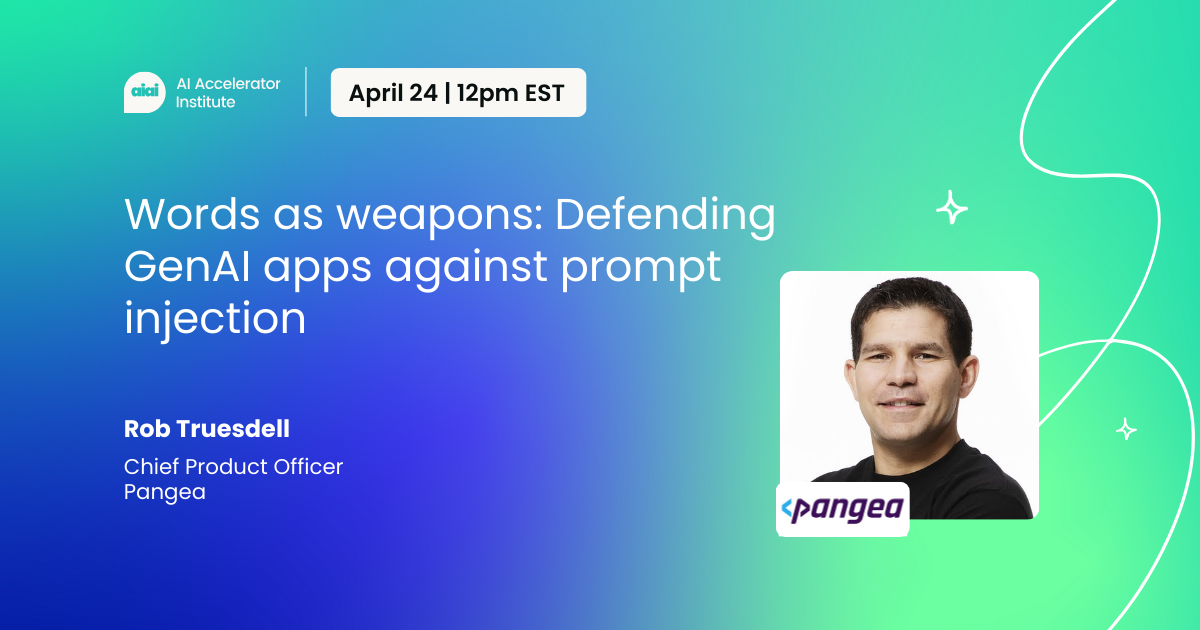
As enterprises race to integrate generative AI into their applications and workflows, adversaries are finding new ways to exploit language models through prompt injection attacks to leak sensitive data and bypass security controls.
But how do these attacks actually work, and what can organizations do to defend their GenAI applications against them?
Join us for an exclusive deep dive with Rob Truesdell, Chief Product Officer at Pangea, as we explore the evolving landscape of prompt injection threats and the latest strategies to secure GenAI applications.
How prompt injection works – A breakdown of direct and indirect techniques, with real-world attack examples and data.
What LLM providers are doing – A look at native defenses built into top models to counteract prompt injection risks.
The insider vs. outsider threat – How adversaries both inside and outside an organization can manipulate GenAI models.
Risk mitigation strategies – Engineering and security best practices to prevent, detect, and respond to prompt injection attempts.
Measuring effectiveness – How to evaluate the efficacy of prompt injection detection mechanisms.
This webinar is a must-attend for security leaders, AI engineers, and product teams looking to understand and mitigate the risks of AI-powered applications in an increasingly adversarial landscape.
Generative artificial intelligence (AI) lets users quickly create new content based on a wide variety of inputs. These can be text, images, animation, sounds, 3D models, and more.
These systems use neural networks to identify patterns in existing data, producing fresh and unique content. One significant advancement in generative AI is the capacity to utilize various learning methods, like unsupervised or semi-supervised learning, during training.
This allows individuals to efficiently use vast amounts of unlabeled data to construct foundation models. These models serve as the groundwork for multifunctional AI systems.
How do you evaluate generative AI models?
There are three main requirements of a successful generative AI model:
1. Quality
Mainly important for applications that interact with users directly, a high-quality generation output is vital. In speech generation, for example, having poor speech quality means it’ll be difficult to understand, and in image generation, outputs need to be visually indistinguishable from natural images.
2. Diversity
Good generative AI models can capture minority modes in their data distribution without compromising on quality. This leads to a minimization of undesired biases in learned models.
3. Speed
A wide variety of interactive applications need fast generation, like real-time image editing for content creation workflows.
How do you develop generative AI models?
There are several types of generative models; combining their positive attributes will lead to even more powerful models:
Diffusion models
Also known as denoising diffusion probabilistic models (DDPMs), these determine vectors in latent space through a two-step process when in training.
Forward diffusion. This process slowly adds random noise to training data.
Reverse diffusion. This process reverses the noise and reconstructs data samples.
New data is created by running the reverse denoising process from entirely random noise.
Diffusion models can, however, take longer to train than variational autoencoder (VAE) models. But the two-step process allows for hundreds, and even an infinite number, of layers to be trained, meaning diffusion models tend to offer the highest quality of output when you’re building generative AI models.
Also categorized as foundation models, diffusion models are large-scale, they’re flexible, and tend to be the best for generalized use cases. Their reverse sampling process does, however, make running them a slow and lengthy process.
Variational autoencoders (VAE) models
Consisting of two neural networks: the encoder and the decoder. When VAE models are given an input, the encoder converts it into a smaller and denser representation of the data.
The compressed representation of data keeps the information needed for a decoder to then reconstruct the original input data while discarding anything irrelevant. Both encoder and decoder work together to learn a simple and efficient latent data representation, allowing users to sample new latent representations that can be mapped through the decoder to create new data.
VAE models can create outputs, like images for example, faster but they won’t be as detailed as the ones from diffusion models.
Before diffusion models, GANs were the most commonly used methodology. These models place two neural networks against each other.
Generator. Creates new examples.
Discriminator. Learns to separate created content as real or fake.
GANs can offer high-quality samples and they often create outputs quickly; the sample diversity, however, is weak, and GANs are better suited for domain-specific data generation.
ChatGPT
Developed by OpenAI, ChatGPT allows users to have free access to basic artificial intelligence content generation. Its premium subscription, ChatGPT Plus, is marketed to users who need extra processing power and want early access to new features.
Key features
Language fluency
Personalized interactions
Conversational context
Language translation
Natural language understanding
Completion and suggestion of text
Open-domain conversations
Use cases
Chatbot
Content generation
Pros
A free version for the general public
Offers more accurate answers and natural interactions
The API lets developers embed a ChatGPT functionality into apps and products
Cons
Can’t access data after September 2021, but plugins may help fix this issue
Can be prone to errors and misuse
Pricing
A free version is available
Paid membership: begins at $0.002 per 1,000 prompt tokens
GPT-4
It creates human-like text responses to both word prompts and questions. Each response is unique, allowing you to enter the same query as many times as you want and get different responses every time.
The latest version of this large language model, GPT-4, has been marketed as more accurate and inventive than its previous iterations while being safer and more stable.
Key features
Multilingual ability
Human-level performance
100 trillion parameters
Enhance steerability
Image input ability
Factual performance improved
Use case
Large language model
Pros
A cost-effective solution
Consistent and reliable time saver
GPT-4 has more extensive safety checks and training than previous versions
ChatGPT is the app and GPT is the brain behind it.
Simply put, this is the difference between GPT and ChatGPT.
For efficiency purposes, in this report, we use ChatGPT as a blanket term for OpenAI’s offerings.
Bard
Both a content generation tool and a chatbot, Bard was developed by Google. It uses LaMDA, which is a transformer-based model, and it’s often seen as ChatGPT’s counterpart.
By May 10, Google opened up access to Bard for everyone and added functionalities such as image processing, coding features, and app integration. This enabled a broad spectrum of users, including developers and marketers from around the globe, to leverage Bard for their professional tasks.
Unlike ChatGPT, which has an information cutoff in September 2021, Google Bard has live internet connectivity, allowing it to provide real-time information. According to Sundar Pichai, CEO of Google and Alphabet, Bard strives to merge the expansive knowledge of the world with the capabilities of large language models, generating high-quality responses by sourcing information from the web.
Notably, Google currently views Bard as an ongoing experiment.
Key features
Rating system for user responses
Can help with tasks related to software development and programming
Built on LaMDA
Available through individual Google accounts
Use cases
Chatbot
Content generation
Pros
Pre-tested extensively
A transparent and ethical approach to AI development
Cons
Only available in English
Not available through Google accounts managed by a Google Workspace admin
No conversational history
Pricing
Free
Midjourney
Midjourney stands as a cutting-edge AI art interface, tapping into generative algorithms to fuel artistic creativity. It helps artists to create distinct and captivating pieces, capitalizing on advanced machine learning methodologies.
Offering both art prompts and ideas, Midjourney can even mold full-fledged artworks in response to user preferences. Its intricate neural network has been shaped by comprehensively studying a variety of artistic datasets, paintings, sketches, and photos.
Midjourney appeals to a diverse audience, from seasoned artists who want a fresh point of view to novices wanting to get started.
Key features
High-resolution images
Great image composition
Collaborative potential
Professional applications of images
Pros
Endless prompt generation
Offers big style diversity
Efficient iteration
Cons
High usage costs
Platform not as user-friendly as other options
Pricing
Basic: $10 per month, 3.3 fast hours
Standard: $30 per month, 15 fast hours per month
Pro: $60 per month, 30 fast hours
Mega: $120 per month, 60 fast hours
How generative AI can impact your work
Speed
Thanks to its capability of producing and assisting in decision-making across several areas, generative AI can considerably speed up work processes in companies. It enhances human input and makes sure that time-consuming tasks are completed in a fraction of the time it typically takes.
With artificial intelligence technologies progressively being integrated into workplaces, we can reasonably expect that businesses will operate at an even quicker pace, which will make adaptability and speed essential for success.
Let’s take a look at ways in which generative AI can help speed up work processes:
1. Improving decision-making
Generative AI can quickly analyze large amounts of data to produce insights or suggestions. In finance, for example, AI can generate investment strategies by considering thousands of data points and trends much quicker than a human analyst could. This leads to faster and potentially more accurate decisions.
2. Enhancing creativity and design
When it comes to architecture or product design, generative AI can produce multiple design variations in minutes according to project needs. This means designers can quickly iterate and refine ideas, cutting down the time traditionally required in the design phase.
3. Streamlining content creation
Generative AI can draft articles, generate graphics, or produce video content at an impressive speed. This quick content-generation ability can be particularly useful for industries like journalism, advertising, and entertainment.
4. Providing instant answers to customers
AI chatbots can offer real-time answers to customer queries, which greatly reduces or even eliminates wait times. Whether it’s helping with troubleshooting, product information, or general inquiries, immediate feedback enhances customer experience.
5. Speeding up research and development
In sectors like biotechnology, for example, AI can predict molecule interactions or simulate experiments at a much quicker rate than traditional methods. This means reduced time-to-market for new drugs or materials.
6. Increasing task automation efficiency
Tasks like data entry, scheduling, and basic administrative duties can be completed faster and more efficiently using generative AI. When these repetitive tasks are addressed quickly, businesses can focus on more complex and strategic endeavors.
7. Completing real-time forecasting
Generative AI can rapidly predict market trends, customer preferences, or inventory needs. This instant forecasting helps businesses to make swift decisions, adjust marketing strategies, or manage stock.
8. Generating training modules
AI-based training programs can be generated based on individual needs, which makes sure that employees are brought up to speed faster. Through this tailored content, training durations are minimized, and efficiency is boosted.
9. Speeding up recruitment processes
Generative AI can quickly screen candidate profiles, matching skills and qualifications with job requirements. This speeds up the shortlisting process and helps companies hire employees faster, which reduces vacant position downtimes.
10. Enhancing cybersecurity
AI systems can detect and neutralize threats in real-time, making sure that business operations are uninterrupted. A fast response to potential threats leads to less downtime and swift work processes.
Generative AI’s role in software development is paving the way for faster, more efficient, and more intuitive software creation processes. This technology can significantly improve writing, testing, and optimizing software, leading to a transformation in how software is conceptualized, developed, and deployed.
Let’s have a look at how generative AI is changing software development:
1. Generating and auto-completing code
This technology can help developers by auto-generating bits of code based on context. By understanding the objective and the existing code structure, AI can suggest or even write snippets, which speeds up the development process.
2. Detecting bugs
By analyzing big code repositories, generative AI models can easily predict where bugs could happen – and even suggest potential fixes. This proactive approach can lead to more stable software and reduce debugging time.
3. Testing software
AI can simulate a variety of user behaviors and scenarios to help test software. This makes sure that comprehensive testing is completed in a fraction of the time, which provides strong and reliable software applications.
4. Providing API integrations
Generative AI can help with the integration of many APIs by understanding their documentation and generating appropriate integration code, simplifying the process of adding new functionalities to applications.
5. Enhancing user interface (UI) design
Generative design tools can create multiple UI variations based on given parameters. Developers and designers can streamline the UI creation process by choosing or iterating from these designs.
6. Providing personalized user experience (UX)
Generative AI tools can analyze user behavior and feedback, suggesting or even implementing UX improvements so the software can then be adapted to meet individual user needs and preferences.
7. Managing and optimizing databases
Artificial intelligence can help with structuring, querying, and optimizing databases. When predicting potential bottlenecks or inefficiencies, AI can ensure straightforward and efficient data operations.
8. Improving security
Generative AI can simulate cyber-attacks or probe software for vulnerabilities. This helps developers strengthen their applications, as they can understand and predict potential security flaws.
Content creation
These technologies are reshaping the daily work process content landscape, as they provide quick, tailored, and efficient content generation. This lets professionals focus on creative or strategic aspects of their tasks.
As artificial intelligence keeps evolving, its integration into everyday work tasks is likely to become even more prevalent, simplifying the content generation process and enhancing overall productivity.
Let’s explore how this technology makes content generation easier for everyday tasks and operations:
1. Drafting reports and documents
Generative AI can quickly draft reports, summaries, or other documents based on provided data or guidelines. Because you don’t start from scratch and have a foundational draft, you can refine it as needed and streamline your work.
2. Content personalization for marketing
Generative AI can greatly help in analyzing user preferences and behavior. It can tailor content to individual users by creating personalized email campaigns or customized product recommendations on e-commerce platforms.
3. Automated journalism
For news outlets and publishers, artificial intelligence can draft news articles or updates, especially for repetitive content like sports scores or financial updates. This lets human journalists focus on in-depth analyses and features.
4. Graphic design
Generative AI tools can generate a variety of visual content, from website banners to product mock-ups. For daily tasks, like social media posts, AI can deliver many design options, easing the rapid content roll-out.
5. Research summaries
AI can process large amounts of literature or data to generate summaries or insights in academia. Instead of filtering through numerous papers, professionals can receive a condensed overview, which accelerates the research process.
6. Email writing
Drafting emails, proposals, or other communications is much faster with generative AI. The technology uses key points or themes to give users a well-structured draft, streamlining daily communication tasks.
7. Educational content
For trainers, educators, or e-learning platforms, AI can generate quizzes, assignments, or study summaries based on provided course material.
8. Article creation
For content-based websites, generative AI can create article drafts, topic suggestions, or even SEO-optimized content. This can be especially useful for maintaining daily content schedules.
9. Social media management
Social media managers can use artificial intelligence to create post captions, responses to comments, or content suggestions based on trends. This means you can have consistent engagement without needing continuous manual input.
10. Meeting notes and minutes
AI tools can process recordings or notes to create succinct minutes or action points. This reduces administrative load after meetings and helps participants have a clear understanding of what was discussed.
Cost reduction
Through using generative AI, businesses can have a competitive advantage by innovating and saving on costs.
With automating, optimizing, and predicting, companies can easily streamline operations, reduce waste, and make sure they get the best value for their outgoings. AI technology keeps evolving, meaning that its potential for cost savings will only grow.
Here are a few ways that AI can help companies save on costs:
1. Product design and prototyping
Generative AI can create many design alternatives by defining specific constraints and parameters. Designers can use AI to rapidly generate hundreds of options in seconds instead of days or even weeks, which reduces both time and material costs.
2. Content creation
Generating content, such as advertising, web designs, or articles, can be a resource-intensive process. Generative AI models can generate human-like text, images, or even videos.
The automation of part of the content creation process helps businesses drastically reduce the costs associated with hiring multiple content creators, graphic designers, and videographers.
3. Personalization and customer engagement
Generative AI tools can create personalized content for users based on their preferences and behavior. This personalization improves user engagement and can result in higher conversion rates.
4. Repetitive task automation
A variety of businesses face the challenge of repetitive and mundane tasks, like data entry, report generation, and simple customer service inquiries. Generative AI can automate these processes, leading to significant savings in labor costs and increasing overall employee efficiency.
5. Enhanced research and development
Generative AI models can help with drug discovery, materials science, and other sectors with intensive research and development. By predicting molecular structures, testing potential scenarios, or simulating experiments, AI can severely minimize the number of physical tests required, which accelerates timelines and saves on costs.
6. Customer service and support
Generative AI-powered chatbots can handle a wide range of customer inquiries without employee intervention. These systems can offer instant answers at any time of day, which leads to improved customer satisfaction while drastically reducing the need for large customer service teams working around the clock.
7. Improved forecasting
Generative AI can be used to simulate different business scenarios, which helps companies to make better-informed decisions about inventory management, sales strategies, and more. By accurately predicting demand or potential business disruptions, companies can reduce waste, avoid overstocking, and optimize supply chains.
8. Training and education
By using Generative AI to create personalized learning paths for employees, businesses don’t need to invest heavily in training programs, seminars, or courses. These AI-driven platforms can adapt to each individual’s learning pace and needs, reducing the time and cost of training.
9. Recruitment and human resources
Screening candidates, processing applications, and performing initial interviews can be time-consuming and expensive. Generative AI tools can analyze large amounts of applications, predict the fit between candidates and jobs, and even automate the initial communication between companies and applicants.
10. Enhancing cybersecurity
Generative AI can simulate cyberattacks and help companies identify vulnerabilities in their systems. This proactive approach can prevent expensive breaches and make sure there aren’t any interruptions in business continuity. AI-driven systems can also monitor networks in real time, identifying and countering threats faster than human-only teams.
Increased personalization
The increasing integration of generative AI into personalization is changing how businesses and platforms interact with and serve their users. By offering highly tailored experiences, products, and services, companies can enhance user satisfaction and encourage deeper loyalty and trust.
Here’s how this technology enhances personalization:
1. E-commerce experience
Generative AI can tailor the shopping experience by analyzing user behavior, preferences, and purchase history. It can also recommend products, offer personalized discounts, or even generate custom product designs, making online shopping a better experience according to individual preferences.
Streaming platforms and social media platforms, for example, can use generative AI to curate content feeds. By understanding user preferences, these platforms can offer highly relevant content, such as articles or posts to improve user engagement.
3. Learning and education
Students can have a more personalized learning path with generative AI. The technology can assess students’ strengths, weaknesses, and learning paces, offering tailored lessons, assignments, or resources for optimal learning outcomes.
4. Marketing and advertising
Companies can use generative AI to create personalized marketing messages, email campaigns, or advertisements. Understanding individual user demographics, interests, and behaviors, helps to make marketing more effective.
5. Health and fitness
Generative AI can create custom workout plans, diet charts, or even mental health exercises by analyzing a person’s health data, goals, and preferences. This leads to a more effective and sustainable wellness journey.
6. Customer support
Chatbots and support systems powered by generative AI can offer personalized solutions based on a user’s past interactions, purchase history, and preferences, for faster and better issue resolution.
7. Product development
Companies can use generative AI to analyze customer feedback, reviews, and preferences to design products or services. Products can then meet market demand and resonate with target audiences.
8. Financial services
Banks and financial institutions can utilize generative AI to offer personalized financial advice, investment strategies, or loan options based on individual financial behavior, needs, and goals.
9. Event planning
Generative AI can create personalized event agendas, travel itineraries, or experiences. It can help plan a city tour based on interests or other more personalized ideas according to every individual user.
10. User interface and experience (UI/UX)
Generative AI can adapt and redesign software or website interfaces based on user behavior. This offers users a smoother, more intuitive, and more engaging digital experience.
5 uses of generative AI tools
Audio applications
Generative AI audio models use machine learning techniques, artificial intelligence, and algorithms to create new sounds from existing data. This data can include musical scores, environmental sounds, audio recordings, or speech-to-sound effects.
After the models are trained, they can create new audio that’s original and unique. Each model uses different types of prompts to generate audio content, which can be:
Environmental data
MIDI data
User input in real-time
Text prompts
Existing audio recordings
There are several applications of generative AI audio models:
1. Data sonification
Models can convert complex data patterns into auditory representations, which lets analysts and researchers understand and explore data through sound. This can be applied to scientific research, data visualization, and exploratory data analysis.
2. Interactive audio experiences
Creating interactive and dynamic audio experiences, models can generate adaptive soundtracks for virtual reality environments and video games. The models can also respond to environmental changes or user inputs to improve engagement and immersion.
3. Music generation and composition
Creating musical accompaniment or composing original music pieces is easy for these models; they can learn styles and patterns from existing compositions to generate rhythms, melodies, and harmonies.
4. Audio enhancement and restoration
You can restore and enhance audio recordings with generative AI, which lets you reduce noise, improve the overall quality of sound, and remove artifacts. This is useful in audio restoration for archival purposes.
5. Sound effects creation and synthesis
Models can enable the synthesis of unique and realistic sounds, like instruments, abstract soundscapes, and environmental effects. They can create sounds that copy real-world audio or completely new audio experiences.
6. Audio captioning and transcription
Helping to automate speech-to-text transcription and audio captioning, models can greatly improve accessibility in several media formats like podcasts, videos, and even live events.
7. Speech synthesis and voice cloning
You can clone someone’s voice through generative AI models and create speech that sounds exactly like them. This can be useful for audiobook narration, voice assistants, and voice-over production.
8. Personalized audio content
Through the use of generative AI models, you can create personalized audio content tailored to individual preferences. This can range from ambient soundscapes to personalized playlists or even AI-generated podcasts.
Like other AI systems, generative audio models train on vast data sets to generate fresh audio outputs. The specific training method can differ based on the architecture of each model.
Let’s take a look at how this is generally done by exploring two distinct models: WaveNet and GANs.
WaveNet
Created by Google DeepMind, WaveNet is a generative audio model grounded on deep neural networks. Using dilated convolutions, it creates great-quality audio by referencing previous audio samples. It can produce lifelike speech and music, finding applications in speech synthesis, audio enhancement, and audio style adaptation. Its operational flow consists of:
Waveform sampling. WaveNet starts with an input waveform, usually a sequence of audio samples, processed through multiple convolutional layers.
Dilated convolution. To recognize long-spanning dependencies in audio waveforms, WaveNet employs dilated convolutional layers. The dilation magnitude sets the receptive field’s size in the convolutional layer, helping the model distinguish extended patterns.
Autoregressive model. Functioning autoregressively, WaveNet sequentially generates audio samples, each influenced by its predecessors. It then forecasts the likelihood of the upcoming sample based on prior ones.
Sampling mechanism. To draw audio samples from the model’s predicted probability distribution, WaveNet adopts a softmax sampling approach, ensuring varied and realistic audio output.
Training protocol. The model undergoes training using a maximum possibility estimation technique, which is designed to increase the training data’s probability when it comes to the model’s parameters.
Generative Adversarial Networks (GANs)
A GAN encompasses two neural networks: a generator for creating audio samples and a discriminator for judging their authenticity. Here’s an overview:
Architecture. GANs are structured with a generator and discriminator. The former ingests a random noise vector, outputting an audio sample, while the latter evaluates the audio’s authenticity.
Training dynamics. The generator creates audio samples from random noise during training and the discriminator’s task is to categorize them. Working together, the generator refines its output to appear genuine to the discriminator, and this synchronization is executed by reducing the binary cross-entropy loss between the discriminator’s findings and the actual labels of each sample.
Adversarial loss. GANs aim to reduce the adversarial loss, which is the gap between real audio sample distributions and fake ones. This minimization rotates between the generator’s enhancements for more authentic output and the discriminator’s improvements in differentiating real from generated audio.
Audio applications. GANs have various audio purposes, such as music creation, audio style modulation, and audio rectification. For music creation, the generator refines itself to form new musical outputs. For style modulation, it adapts the style from one sample to another. For rectification, it’s trained to eliminate noise or imperfections.
Text applications
Artificial intelligence text generators use AI to create written copy, which can be helpful for applications like website content creation, report and article generation, social media post creation, and more.
By using existing data, these artificial intelligence text generators can make sure that content fits tailored interests. They also help with providing recommendations on what someone will most be interested in, from products to information.
There are several applications of generative AI text models:
1. Language translation
These models can be used to improve language translation services, as they can analyze large volumes of text and generate accurate translations in real time. This helps to enhance communication across different languages.
2. Content creation
Perhaps one of the most popular applications, content creation refers to blog posts, social media posts, product descriptions, and more. Models are trained on large amounts of data and can produce high-quality content very quickly.
3. Summarization
Helpful for text summarization, models provide concise and easy-to-read versions of information by highlighting the most important points. This is useful when it comes to summarizing research papers, books, blog posts, and other long-form content.
4. Chatbot and virtual assistants
Both virtual assistants and chatbots use text generation models to be able to interact with users in a conversational way. These assistants can understand user queries and offer relevant answers, alongside providing personalized information and assistance.
5. SEO-optimized content
Text generators can help to optimize text for search engines. They can decide on the meta description, headline, and even keywords. You can easily find out the most search topics and their keyword volumes to make sure you have the best-ranking URLs.
How do generative AI text models work?
AI-driven content generators use natural language processing (NLP) and natural language generation (NLG) techniques to create text. These tools offer the advantage of improving enterprise data, tailoring content based on user interactions, and crafting individualized product descriptions.
Algorithmic structure and training
Content-based on NLG is crafted and structured by algorithms. These are typically text-generation algorithms that undergo an initial phase of unsupervised learning. During this phase, a language transformer model immerses itself in vast datasets, extracting a variety of insights.
By training on extensive data, the model becomes skilled in creating precise vector representations. This helps in predicting words, phrases, and larger textual blocks with heightened context awareness.
Evolution from RNNs to transformers
While Recurrent Neural Networks (RNNs) have been a traditional choice for deep learning, they often have difficulty in modeling extended contexts. This shortcoming comes from the vanishing gradient problem.
This issue happens when deep networks, either feed-forward or recurrent, find it difficult to relay information from the output layers back to the initial layers. This leads to multi-layered models either failing to train efficiently on specific datasets or settling prematurely for less-than-ideal solutions.
Transformers emerged as a solution to this dilemma. With the increase in data volume and architectural complexity, transformers provide advantages like parallel processing capabilities. They’re experienced at recognizing long patterns, which leads to stronger and more nuanced language models.
Simplified, the steps to text generation look like this:
Data collection and pre-processing. Text data gathering, cleaning, and tokenization into smaller units for model inputs.
Model training. The model is trained on token sequences, and it adjusts its parameters in order to predict the next token in a sequence according to the previous ones.
Generation. After the model is trained, it can create new text by predicting one token at a time based on the provided seed sequence and on tokens that were previously generated.
Decoding strategies. You can use different strategies, such as beam search, op-k/top-p sampling, or greedy coding to choose the next token.
Fine-tuning. The pre-trained models are regularly adjusted on particular tasks or domains to improve performance.
Conversational applications
Conversational AI focuses on helping the natural language conversations between humans and AI systems. Leveraging technology like NLG and Natural Language Understanding (NLU), it allows for seamless interactions.
There are several applications of generative AI conversational models:
1. Natural Language Understanding (NLU)
Conversational AI uses sophisticated NLU techniques to understand and interpret the meanings behind user statements and queries. Through analyzing intent, context, and entities in user inputs, conversational AI can then extract important information to generate appropriate answers.
2. Speech recognition
Conversational AI systems use advanced algorithms to transform spoken language into text. This lets the systems understand and process user inputs in the form of voice or speech commands.
3. Natural language generation (NLG)
To generate human-like answers in real time, conversational AI systems use NLG techniques. By taking advantage of pre-defined templates, neural networks, or machine learning models, the systems can create meaningful and contextually appropriate answers to queries.
Using strong dialogue management algorithms, conversational AI systems can maintain a context-aware and coherent conversation. The algorithms allow AI systems to understand and answer user inputs in a natural and human-like way.
How do generative AI conversational models work?
Backed by underlying deep neural networks and machine learning, a typical conversational AI flow involves:
An interface that lets users input text into the system or automatic speech recognition, which is a user interface that transforms speech into text.
Natural language processing extracts users’ intent from text or audio input, translating text into structured data.
Natural language understanding processes data based on context, grammar, and meaning to better understand entity and intent. It also helps it to act as a dialogue management unit in order to build appropriate answers.
An AI model predicts the best answer for users according to the intent and the models’ training data. Natural language generation infers from the processes above to form an appropriate answer to interact with humans.
Data augmentation
Through using artificial intelligence algorithms, especially generative models, you can create new, synthetic data points that can be added to an already existing dataset. This is typically used in machine learning and deep learning applications to enhance model performance, achieved by increasing both the size and the diversity of the training data.
Data augmentation can help to overcome challenges of imbalance or limited datasets. By creating new data points similar to the original data, data scientists can make sure that models are stronger and better at generalizing unseen data.
Generative AI models like Variational Autoencoders (VAEs) and Generative Adversarial Networks (GANs) are promising for the generation of high-quality synthetic data. They learn the underlying distribution of input data and are able to create new samples that very closely resemble the original data points
Variational Autoencoders (VAEs)
Type of generative model that utilizes an encoder-decoder architecture. The encoder learns a lower-dimensional representation (latent space) of the input data and the decoder rebuilds the input data from the latent space.
VAEs force a probabilistic structure on the latent space that lets them create new data points by sampling from learned distribution. These models are useful for data augmentation tasks with input data that has a complex structure, like text or images.
Generative Adversarial Networks (GANs)
Consisting of two neural networks, a discriminator and a generator, that are simultaneously trained. The generator creates synthetic data points and the discriminator assesses the quality of the created data by comparing it to the original data.
Both the generator and the discriminator compete against each other, with the generator attempting to create realistic data points to deceive the discriminator. The discriminator tries to accurately tell apart real and generated data, and as the training progresses, the generator gets better at producing high-quality synthetic data.
There are several applications of generative AI data augmentation models:
1. Medical imaging
The generation of synthetic medical imaging like MRI scans or X-rays helps to increase the size of training datasets and enhance diagnostic model performance.
2. Natural language processing (NLP)
Creating new text samples by changing existing sentences, like replacing words with synonyms, adding noise, or changing word order. This can help enhance the performance of machine translation models, text classification, and sentiment analysis.
3. Computer vision
The enhancement of image datasets by creating new images with different transformations, like translations, rotations, and scaling. Can help to enhance the performance of object detection, image classification, and segmentation models.
4. Time series analysis
Generating synthetic time series data by modeling underlying patterns and creating new sequences with similar characteristics, which can help enhance the performance of anomaly detection, time series forecasting, and classification models.
5. Autonomous systems
Creating synthetic sensor data for autonomous vehicles and drones allows the safe and extensive training of artificial intelligence systems without including real-world risks.
6. Robotics
Generating both synthetic objects and scenes lets robots be trained for tasks like navigation and manipulation in virtual environments before they’re deployed into the real world.
How do generative AI data augmentation models work?
Augmented data derives from original data with minor changes and synthetic data is artificially generated without using the original dataset. The latter often uses GANs and deep neural networks (DNNs) in order to generate synthetic data.
There are a few data augmentation techniques:
Text data augmentation
Sentence or word shuffling. Change the position of a sentence or word randomly.
Word replacement. You can replace words with synonyms.
Syntax-tree manipulation. Paraphrase the sentence by using the same word.
Random word insertion. Add words at random.
Random word deletion. Remove words at random.
Audio data augmentation
Noise injection. Add random or Gaussian noise to audio datasets to enhance model performance.
Shifting. Shift the audio left or right with random seconds.
Changing speed. Stretches the times series by a fixed rate.
Changing pitch. Change the audio pitch randomly.
Image data augmentation
Color space transformations. Change the RGB color channels, brightness, and contrast randomly.
Image mixing. Blend and mix multiple images.
Geometric transformations. Crop, zoom, flip, rotate, and stretch images randomly; however, be careful when applying various transformations on the same images, as it can reduce the model’s performance.
Random erasing. Remove part of the original image.
Kernel filters. Change the blurring or sharpness of the image randomly.
Visual/video applications
Generative AI is becoming increasingly important for video applications due to its ability to produce, modify, and analyze video content in ways that were previously impractical or impossible.
With the growing use of generative AI for video applications, however, some ethical concerns arise. Deep Fakes, for example, have been used in malicious ways, and there’s a growing need for tools to detect and counteract them.
Authenticity verification, informed consent for using someone’s likeness, and potential impacts on jobs in the video production industry are just some of the challenges that still need to be navigated.
There are several applications of generative AI video models:
1. Content creation
Generative models can be used to create original video content, such as animations, visual effects, or entire scenes. This is especially important for filmmakers or advertisers on a tight budget who might not be able to afford extensive CGI or live-action shoots.
2. Video enhancement
Generative models can upscale low-resolution videos to higher resolutions, fill in missing frames to smooth out videos, or restore old or damaged video footage.
3. Personalized content
Generative AI can change videos to fit individual preferences or requirements. For example, a scene could be adjusted to show a viewer’s name on a signboard, or a product that the viewer had previously expressed interest in.
4. Virtual reality and gaming
Generative AI can be used to generate realistic, interactive environments or characters. This offers the potential for more dynamic and responsive worlds in games or virtual reality experiences.
5. Training
Due to its ability to create diverse and realistic scenarios, generative AI is great for training purposes. It can generate various road scenarios for driver training or medical scenarios for training healthcare professionals.
6. Data augmentation
For video-based machine learning projects, sometimes there isn’t enough data. Generative models can create additional video data that’s similar but not identical to the existing dataset, which enhances the robustness of the trained models.
7. Video compression
Generative models can help in executing more efficient video compression techniques by learning to reproduce high-quality videos from compressed representations.
8. Interactive content
Generative models can be used in interactive video installations or experiences, where the video content responds to user inputs in real time.
9. Marketing and advertising
Companies can use generative AI to create personalized video ads for viewers or to quickly generate multiple versions of a video advertisement for A/B testing.
10. Video synthesis from other inputs
Generative AI can produce video clips from textual descriptions or other types of inputs, allowing for new ways of storytelling or visualization techniques.
Generative video models are computer programs that create new videos based on existing ones. They learn from video collections and generate new videos that look both unique and realistic.
With practical applications in virtual reality, film, and video game development, generative video models can be used for content creation, video synthesis, and special effects generation.
Creating a generative video model involves:
Preparing video data
The first step includes gathering a varied set of videos reflecting the kind of output to produce. Streamlining and refining this collection by discarding any unrelated or subpar content guarantees both quality and relevancy. The data must then be organized into separate sets for training and validating the model’s performance.
Choosing the right generative model
Picking an appropriate architecture for generating videos is vital. Potential choices include Variational Autoencoders (VAEs) or Generative Adversarial Networks (GANs). The options are:
Variational Autoencoders (VAEs). These models acquire a latent understanding of videos and then craft new sequences by pulling samples from this acquired latent domain.
Generative Adversarial Networks (GANs). These models consist of a generator and discriminator that work in tandem to produce lifelike videos.
Recurrent Neural Networks (RNNs). Models adept at recognizing time-based patterns in videos, producing sequences grounded in these identified patterns.
Conditional generative models. These models create videos based on specific given attributes or data. Factors like computational needs, intricacy, and project-specific demands need to be taken into account when selecting.
Training process for the video generation model
The structure and hyperparameters for the selected generative model are outlined. The curated video data teaches the model, aiming to create both believable and varied video sequences. The model’s efficacy needs to be checked consistently using the validation dataset.
Refining the output
If needed, the generated sequences need to be adjusted to uplift their clarity and continuity. Employ various enhancement techniques, such as diminishing noise, stabilizing the video, or adjusting colors.
Assessment and optimization of the model
The produced videos need to be examined by using multiple criteria, like their visual appeal, authenticity, and variety. Opinions from specialized users or experts can be helpful in gauging the utility and efficiency of the video-generating model.
Putting the model to use
If everything is working as it should, the model can be launched to produce new video sequences. The video generation model can be utilized in diverse areas, including video creation, special cinematic effects, or immersive experiences in virtual reality.
As a result of artificial intelligence’s continuous evolution, there’s an increasing and ever present demand for more efficient, faster and scalable AI solutions. Traditional AI models, especially deep learning approaches, always require exhaustive computational resources which can make them massively expensive and power-hungry.
In light of these challenges, there are many next-generation AI architectures that are emerging as promising alternatives such as hyperdimensional computing (HDC), neuro-symbolic AI (NSAI), capsule networks, and low-power AI chips.
This article is an exploration into how these innovations can power AI algorithms, in turn making them more efficient and accessible for business use cases and applications.
Hyperdimensional computing (HDC) for AI acceleration
Hyperdimensional computing (HDC) is a novel type of computing paradigm that fully encodes and processes information using high-dimensional vectors. HDC is very different from normal computing models that tend to need to use exact numerical operations, HDC is a way to create AI that mimics the way our brain encodes and processes information in turn enabling faster learning and better generalisation.
Why is HDC impacting the future of AI?
Accelerated learning: Contrary to normal deep learning models that tend to need thousands of training samples, HDC models excel at learning from a small amount of data whilst not losing accuracy.
Robustness: HDC is resistant to noise by default, making it incredibly fit for real-world AI applications in fields such as healthcare, finance, quantum computing and cybersecurity.
Energy efficiency: Since HDC relies solely on binary operations instead of super complex floating-point arithmetic it significantly reduces energy required for advanced AI making it more viable for low-power devices and edge computing.
Advanced fraud detection: Banks and other financial institutions can employ HDC to identify fraud patterns within transactions very quickly.
Healthcare diagnostics: HDC-powered models can recognise medical conditions with much fewer training samples in turn reducing their dependency on massive labeled datasets.
Edge AI: HDC is incredibly beneficial for AI applications running on edge devices such as smart sensors and IoT systems.
Neuro-symbolic AI in edge computing
Normal deep learning models work really well in structured environments but really tend to struggle when asked to reason, explain their decisions or adapt to novel information. Neuro-symbolic AI (NSAI) combines the deep learning approach with symbolic reasoning in turn making AI systems more interpretable and adaptable.
How does NSAI benefit edge computing?
Reasoning and learning: Different from deep learning models that learn from patterns alone, NSAI integrates deep symbolic rules that allow AI to naturally reason and make decisions.
Efficient decision-making: This hybrid approach lessens the need for massive datasets in turn allowing AI to work effectively on edge devices where processing power is limited.
Explainability: Since NSAI models incorporate natural rules and logic, they provide clear justifications for their decisions in turn making them far more trustworthy in regulated industries like healthcare and finance.
Business applications
Autonomous vehicles: AI-powered decision-making in self-driving cars can be vastly improved using NSAI by combining sensor data with predefined road safety and other complex rules.
Smart manufacturing: Predictive maintenance powered by NSAI can further help factories reduce downtime and optimise their machinery performance.
Customer service AI: AI chatbots using NSAI can provide much more human-like interactions, for example, they can deeply understand customer intent beyond simple pattern matching.
Transformers have constantly been at the forefront of AI advancements, especially in natural language processing (NLP) and image generation. That being said, Capsule Networks (CapsNets) offer us an alternative that addresses most of the inefficiencies found with traditional deep learning models.
Transformers: Strengths and drawbacks
Transformers including models like GPT-4 and BERT, excel at understanding complicated language and generating very human-like text.
They do however have limitations:
High computational cost: They require extensive computational resources, making them very difficult to deploy on edge devices.
Lack of hierarchical understanding: Transformers treat all data as sequences in turn limiting their ability to understand deep spatial relationships in images.
Capsule networks: A more efficient alternative?
CapsNets were designed to overcome the limitations of convolutional neural networks (CNNs) and transformers.
They offer:
Better representation of spatial hierarchy: Unlike CNNs which always lose spatial information when pooling data, CapsNets maintain this information in turn making them better for image recognition tasks.
Fewer training samples: CapsNets generalise quite well with fewer samples also reducing the need for massive labeled datasets.
Improved generalisation: Unlike transformers, which require fine-tuning for every new domain found, CapsNets can better recognise patterns across different contexts.
Business applications
Medical imaging: Capsule Networks can improve the accuracy of diagnosing certain diseases in radiology and pathology.
Autonomous drones: CapsNets help drones better understand environments in turn reducing reliance on massive amounts of training data.
Cybersecurity: AI-driven intrusion detection systems (IDS) using CapsNets can better recognise attack patterns with very limited training data.
Low-power AI chips and quantum-inspired computing
One of the biggest challenges in AI today is energy consumption. As AI models grow larger and larger, they require more processing power, leading to completely unsustainable energy demands.
Low-power AI chips and quantum-inspired computing offer us several potential solutions.
Low-Power AI chips
Neuromorphic chips: Inspired by the brain, these chips use spikes instead of traditional binary computation in turn drastically reducing energy consumption.
Edge AI processors: Custom AI accelerators designed for mobile and IoT applications can run AI workloads without draining battery life.
Memory-in-compute ships: These chips integrate memory and computation in turn,For every layer of business understanding, these advancements are crucial in making strategic investments in AI technologies. reducing data transfer bottlenecks and increasing processing speed.
Quantum-inspired computing
Quantum annealing for optimisation: Quantum-inspired approaches help us to solve complex optimisation problems faster than traditional AI models.
Hybrid AI-quantum systems: Some companies are exploring AI models that integrate classical deep learning with quantum-inspired algorithms to further enhance their efficiency.
Business applications
Supply chain optimisation: AI models powered by quantum-inspired techniques can optimise logistics and delivery routes in real-time.
Financial modeling: AI-driven risk assessment and fraud detection can be enhanced using quantum-inspired methods.
Smart cities: Low-power AI chips enable efficient traffic control, energy management and real-time monitoring of city infrastructure.
As AI becomes more intertwined with our everyday lives the need for more efficient, interpretable and scalable models is more important than ever.
Hyperdimensional computing, neuro-symbolic AI, capsule networks and low-power AI chips are guiding the way for AI systems that are powerful but also practical for real-world applications.
For every layer of business understanding, these advancements are crucial in making strategic investments in AI technologies. Companies that adopt these next-generation architectures will gain a competitive edge by delivering AI-powered solutions that are faster, more efficient and easier to deploy across multiple environments.
Now is the time to explore these innovative AI architectures and leverage them to build the future of intelligent computing.
Large Language Models (LLMs) have demonstrated extraordinary performance in various benchmarks, ranging from complex mathematical problem-solving to nuanced language comprehension.
However, these same models fail almost completely on EnigmaEval—a test suite specifically designed to measure spatial reasoning and puzzle-solving skills. This glaring gap in AI competency not only highlights the current shortcomings of LLMs but also raises important questions about how to improve them, especially for practical applications in business, engineering, and robotics.
In this article, we will explore:
LLM performance in math benchmarks vs. EnigmaEval
Why LLMs Struggle with simple spatial reasoning
The implications for AI-powered automation
Potential solutions: Enhancing spatial intelligence through humans, reinforcement learning, and mixture-of-experts (MoE) models
1. LLM performance in math benchmarks vs. EnigmaEval
LLMs have proven their worth on a variety of math-focused benchmarks but falter on spatial puzzles:
Fig-1 : Excellent in Math, faltering in simple spatial puzzles
While these models excel in complex abstract reasoning and numerical computations, their near-total failure in EnigmaEval exposes a significant deficit in spatial reasoning capabilities.
Fig-2 : Actual ScoreFig-3 : Sample Questions : Link for the entire Q:
2. Why do LLMs struggle with simple spatial reasoning?
A. Text-based training bias
LLMs are predominantly trained on textual data and are optimized to find linguistic and statistical patterns.
Spatial reasoning, particularly when it involves 3D object manipulation or visual geometry, is not well-represented in text corpora. Consequently, these models lack the “visual scaffolding” that humans naturally acquire from interacting with the physical world.
B. Lack of embodied experience
Humans develop spatial intuition through embodied experiences—seeing objects, picking them up, navigating spaces, and manipulating items in real life. LLMs, in contrast, have no direct sensory inputs; they rely solely on textual descriptions, limiting their ability to form the mental models required for spatial or causal reasoning.
Even if an LLM can parse a textual description of a puzzle, the lack of spatial or physical “muscle memory” leads to misguided outputs.
D. Limitations of current architectures
Models like Transformers are exceptionally good at sequence-to-sequence transformations (i.e., text in, text out) but are not natively designed for spatial manipulation.
While some architectures (e.g., Mixture-of-Experts, hierarchical or multimodal systems) have begun to incorporate specialized “expert” modules, mainstream LLMs often do not focus on dedicated spatial-reasoning subcomponents—yet.
3. What does this mean for businesses?
A. LLMs may struggle in key business automation areas
Business processes that implicitly involve spatial understanding can suffer if they rely solely on traditional LLM outputs. Examples include:
Debugging git issues – While text-based merges can be handled, any refactoring that requires visualizing complex dependencies or branching structures may lead to poor results.
Data visualization & analysis – LLMs often fail to interpret charts, graphs, and heatmaps effectively, limiting their utility in business intelligence.
Manufacturing & robotics – Spatially dependent tasks such as assembly line coordination or robotic manipulation demand spatial cognition that current LLMs lack.
Navigation & mapping – Autonomous vehicles and logistics optimizations require AI to handle maps, sensor data, and 3D structures—a challenge for text-anchored models.
B. Prevalence of spatial reasoning tasks
A surprising amount of business and engineering work involves spatial reasoning:
Most of engineering applications (CAD design, architecture)
Some of business analytics tasks (interpreting graphical trends, dashboards)
Some of coding tasks (complex code refactoring, dependency resolution)
Without improvements in spatial understanding, LLMs will remain limited in real-world automation and problem-solving.
One pathway to better spatial reasoning is to fuse text-based LLMs with vision and 3D simulation models. In a Mixture-of-Experts (MoE) architecture, different “experts” handle specific modalities—text, images, point clouds—while a high-level gating network decides which expert to consult. For instance, an “expert” in geometric transformations could help parse and manipulate visual puzzle data, supplementing the LLM’s linguistic strengths.
B. Reinforcement learning and simulation
Reinforcement learning (RL) provides an interactive framework for models to learn from trial and error. By placing AI agents in 3D simulated environments—think robotics simulators, game engines, or specialized puzzle platforms—they can develop an embodied sense of how objects move and interact.
Reward functions – Encouraging correct spatial manipulations or puzzle solutions
Humans can act as on-demand “experts” to guide AI systems during training or real-time decision-making:
Active learning – Human annotators can correct or guide models on spatial tasks, refining their understanding.
Hybrid systems – Combining a human’s intuitive spatial reasoning with an LLM’s processing power can lead to better outcomes, especially in high-stakes scenarios like architecture or surgical robotics.
D. Neural-symbolic and knowledge-based methods
Some researchers advocate blending neural networks with symbolic reasoning engines that can encode geometric and physical laws. Symbolic modules could handle geometric constraints (e.g., angles, distances, volume) while the neural net handles pattern recognition. This hybrid approach aims to give AI a “grounded” understanding of space.
The dismal performance of LLMs on EnigmaEval is not an isolated data point; it underscores a core limitation in current AI models—namely, the lack of spatial reasoning. For businesses and developers relying on AI-driven automation, this shortfall can be a significant barrier. Yet, the path forward is promising:
Mixture-of-experts (MoE) architectures can incorporate specialized spatial or vision “experts.”
Reinforcement learning and simulated 3D environments can imbue AI with a more embodied sense of space.
Human collaboration ensures that AI remains grounded in real-world tasks that require physical intuition and problem-solving.
Ultimately, bridging the gap between text-based reasoning and spatial understanding will be essential for AI’s next leap forward.
Models that can genuinely perceive, manipulate, and reason about the physical world will transform a wide array of industries—from logistics and robotics to design and data analytics—ushering in an era of more versatile, reliable, and cognitively flexible AI systems.
My name is Akash, co-founder and CEO of Bellum.ai. Our mission is to help companies build reliable AI systems in production. In this talk, I’ll share insights from working with hundreds of companies using AI, highlighting what works, what doesn’t, and where AI development is headed.
The journey to AI innovation
Early experiences with AI
AI has always been on the horizon, but my moment of realization came about four to five years ago, at the beginning of COVID, when I first experimented with GPT-3’s API. It wasn’t perfect—prone to generating random, inaccurate responses—but it demonstrated a capability never seen before: auto-completing sentences in a meaningful way.
At that time, I was working in recruiting software, leveraging AI for tasks like job description generation and email classification. Our AI-powered job description generator went viral, demonstrating the potential for AI-driven automation.
However, implementing these models in production came with significant challenges—prompt engineering, evaluation, and pipeline collaboration were all difficult.
The breakthrough with ChatGPT
When ChatGPT launched in November 2022, it was clear that AI was going mainstream. The challenges we faced with implementing AI in production—reliability, evaluation, and collaboration—became widespread across industries.
Recognizing this, my co-founders and I started Bellum.ai to help businesses effectively leverage large language models (LLMs) and build robust AI systems.
Additionally, my experience at McKinsey provided insight into AI governance and the evolution of AI technologies. Witnessing the rise of GPT models and their growing impact across industries reaffirmed the need for structured AI deployment frameworks.
Quantum computing faces a fundamental challenge: qubits, the basic units of quantum information, are notoriously fragile.
Conventional approaches, such as superconducting circuits and trapped ions, require intricate error-correction techniques to counteract decoherence. Microsoft has pursued an alternative path: Majorana-based topological qubits, which promise inherent noise resistance due to their non-local encoding of quantum information.
This idea, based on theoretical work from the late 1990s, suggests that quantum states encoded in Majorana zero modes (MZMs) could be immune to local noise, reducing the need for extensive error correction. Microsoft has invested two decades into developing these qubits, culminating in the recent “Majorana 1” prototype.
However, given past controversies and ongoing skepticism, the scientific community remains cautious in interpreting these results.
The scientific basis of Majorana-based qubits
Topological qubits derive their stability from the spatial separation of Majorana zero modes, which exist at the ends of specially engineered nanowires. These modes exhibit non-Abelian statistics, meaning their quantum state changes only through specific topological operations, rather than local perturbations. This property, in theory, makes Majorana qubits highly resistant to noise.
Microsoft’s approach involves constructing “tetrons,” pairs of Majorana zero modes that encode a single logical qubit through their collective parity state. Operations are performed using simple voltage pulses, which avoids the complex analog controls required for traditional superconducting qubits.
Additionally, digital measurement-based quantum computing is employed to correct errors passively. If successful, this design could lead to a scalable, error-resistant quantum architecture.
However, while the theoretical framework for Majorana qubits is robust, experimental verification has been challenging. Majorana zero modes do not occur naturally and must be engineered in materials like indium arsenide nanowires in proximity to superconductors.
Establishing that these states exist and behave as expected has proven difficult, leading to past controversies.
Historical controversies: The 2018 retraction
A major setback for Microsoft’s Majorana initiative occurred in 2018 when researchers, including Leo Kouwenhoven’s team at TU Delft (funded by Microsoft), published a Nature paper claiming to have observed quantized conductance signatures consistent with Majorana zero modes.
This was hailed as a breakthrough in topological quantum computing. However, by 2021, the paper was retracted after inconsistencies were found in data analysis. Independent replication attempts failed to observe the same results, and an internal investigation revealed that a key graph in the original paper had been selectively manipulated.
This event, dubbed the “Majorana Meltdown,” significantly damaged the credibility of Microsoft’s approach. It highlighted the challenge of distinguishing genuine Majorana modes from other quantum states that mimic their signatures due to material imperfections. Many physicists became skeptical, arguing that similar issues could undermine subsequent claims.
Experimental progress and remaining challenges
Despite the 2018 controversy, Microsoft and its collaborators have continued refining their approach. The recent announcement of the “Majorana 1” chip in 2025 presents experimental evidence supporting the feasibility of Majorana-based qubits.
Key advancements include:
Fabrication of “topoconductor” materials: Microsoft developed a new indium arsenide/aluminum heterostructure to reliably host Majorana zero modes.
Parity measurement success: The team demonstrated that they could measure the qubit’s parity (even vs. odd electron occupation) with 99% accuracy, a crucial validation step.
Increased parity lifetime: The qubit’s state exhibited stability over milliseconds, significantly surpassing superconducting qubits’ coherence times (which are typically in the microsecond range).
Digital control implementation: Unlike analog-tuned superconducting qubits, Majorana qubits can be manipulated with simple voltage pulses, theoretically enabling large-scale integration.
While these are important steps forward, the experiments have not yet demonstrated key quantum operations, such as two-qubit entanglement via non-Abelian braiding. Until this milestone is achieved, claims about the superiority of topological qubits remain speculative.
Comparison with other qubit technologies
To assess Microsoft’s claims, it is useful to compare Majorana qubits with existing quantum computing platforms:
Superconducting qubits (IBM, Google): These have demonstrated successful quantum error correction and multi-qubit entanglement but require extensive calibration and error correction. Fidelity levels for two-qubit gates currently range around 99.9%.
Trapped-ion qubits (IonQ, Quantinuum): These offer superior coherence times (seconds vs. microseconds for superconductors) but suffer from slow gate speeds and complex laser-based control.
Majorana-based qubits: Theoretically provide built-in error protection, reducing the need for extensive error correction. However, experimental validation is still in progress, and large-scale integration remains untested.
Microsoft has argued that Majorana qubits will enable a quantum computer with a million qubits on a single chip, a feat that conventional qubits struggle to achieve.
While this is an exciting possibility, many researchers caution that scaling challenges remain, especially given the extreme conditions (millikelvin temperatures, precise nanowire fabrication) required for Majorana qubits.
Skepticism from the Scientific Community
Despite recent progress, many physicists remain skeptical of Microsoft’s claims.
Key concerns include:
Lack of direct evidence for Majorana zero modes: While Microsoft’s 2025 Nature paper presents strong supporting data, the scientific community has yet to reach a consensus that Majorana modes have been definitively observed.
Alternative explanations for observed phenomena: Many experimental signatures attributed to Majorana states could be explained by disorder-induced states or other trivial effects in semiconductor-superconductor interfaces.
Unverified large-scale claims: Microsoft’s assertion that its approach will lead to fault-tolerant quantum computing “within years, not decades” is met with skepticism. Experts note that even the most advanced conventional quantum computers are still years away from practical applications, and scaling from an 8-qubit chip to a million-qubit processor is an enormous leap.
Comparison to competing approaches: Some argue that improvements in quantum error correction for superconducting and trapped-ion qubits may render topological qubits unnecessary by the time they are fully realized.
A Promising but unproven path
Microsoft’s Majorana-based qubits represent one of the most ambitious efforts in quantum computing. The theoretical promise of intrinsic error protection and simplified quantum control is compelling, and recent experiments provide encouraging evidence that topological qubits can be realized.
However, historical controversies, ongoing skepticism, and the lack of key demonstrations (such as two-qubit gates) mean that these qubits are not yet a proven alternative to existing technologies.
While Microsoft has made significant strides in overcoming past setbacks, their claims of imminent large-scale quantum computing should be met with caution.
The coming years will be critical in determining whether Majorana qubits will revolutionize quantum computing or remain an elegant but impractical idea. As independent verification and further experiments unfold, the scientific community will ultimately decide whether Microsoft’s bold bet pays off.
Manual verification, checking, and onboarding are things of the past. Nowadays, with the emergence of artificial intelligence technology, almost all operations have become streamlined and automated.
Pre-trained algorithms of artificial intelligence and machine learning help organizations reduce manual efforts, which are time-consuming and not free from errors. Human beings can commit mistakes for being fatigued or under workload pressures.
However, AI technology is free from fatigue and workload pressure, and automated checks perform quick actions with just a single click. Therefore, companies have now replaced manual processes with automated ones and are moving toward a streamlined process for all operations.
Artificial intelligence has revolutionized the business onboarding process and enables organizations to streamline their operations regarding partnerships, investments, and other kinds of collaborations with other entities.
This blog post will highlight the role of AI technology in business onboarding and will explain how it has revolutionized the process.
How can AI revolutionize the onboarding process?
Companies have to deal with customers, employees, and other organizations for various purposes. There is a need for a streamlined process for onboarding. Before allowing access to entities on board, it is necessary to verify their authenticity and legitimacy and it is a major part of the onboarding process.
Traditionally, companies verify entities manually, and perform all the steps included in the onboarding process with human efforts. Employees collect various documents, analyze them, verify them, and then onboard entities.
However, it is no longer needed, companies can now verify entities remotely and streamline their onboarding process. They can simply employ artificial intelligence technology to streamline mind verification and the onboarding process.
Many companies offer advanced solutions that involve AI technology in their operation and provide a streamlined onboarding process for customers and businesses.
Companies that onboard other organizations as their customers or as partners can utilize the Know Your Business (KYB) service, which involves AI technology in all the operations, offers the utmost security from fraud and offers a streamlined onboarding process.
The KYB solution involves AI checks and verifying entities quickly to find their risk potential. It helps to make well-informed decisions regarding onboarding.
Role of automation in business verification and onboarding
Artificial intelligence (AI) offers an automated service for business verification, customer authentications, and the onboarding process. Companies that employ AI technology in their operations can reduce 50% time to onboard new entities.
Pretrained algorithms within the business verification and onboarding process offer a thorough screening in the form of cross-checking and verification in one click. With the help of artificial intelligence, companies have devised an all-in-one solution for streamlined onboarding processes, such as Know Your Business(KYB).
In an automated process, companies verify collected documents through automated checks, which highlight risk potential in case the documents are forged or fake.
Fraudsters generate fake identity papers which are difficult to be identified manually through the human eye. Companies need artificial intelligence sharp detectors to identify fraudster tactics. Therefore, aLong with a streamlined onboarding process, automated checks of AI offer the utmost security from fraudsters.
Businesses that have to deal with other business entities can easily identify shell companies through advanced verification solutions.
How does a streamlined business onboarding process contribute to growth and success?
The streamlined onboarding process always becomes the customer center of attraction. Nobody prefers time-consuming and complex processes for verification and onboarding.
Artificial intelligence offers a streamlined-onboarding process and enables organizations to enhance their users’ interest and satisfaction. Through remote and digital verification, which involves AI, companies can enable their users and clients to get verified while sitting at home. It makes organizations reliable and credible.
Moreover, as automated service offers the most accurate results, it makes a business credible and trustworthy to attract more and more clients and grab business opportunities.
Therefore, a streamlined verification and onboarding process contributes to business growth and success as it enables organizations to onboard more and more clients and become partners with highly successful businesses.
Organizations that do not have a streamlined business onboarding process may lose great clients and partners. People always prefer to have simplified operations, which artificial intelligence technology offers in the form of a streamlined business onboarding system.
Final words
Companies can utilize artificial intelligence technology to streamline the process to onboard a business. Automated checks of artificial intelligence within the streamlined business onboarding process enable organizations to become partners with successful organizations and attract more clients.
Users always prefer a streamlined onboarding verification process which is the result of artificial intelligence. AI has revolutionized the onboarding process and verification protocols for organizations.
Manual verification and data collection are now things of the past, and businesses utilize remote services, digital means, and automated techniques to streamline all operations, such as document collection, analysis, and verification.
This technology is being used to identify fake photos. An AI-powered tool called Photoshop Detector can recognize and detect a variety of objects, patterns, pictures, and more. The system uses a lot of data, objects, or photos to learn for this goal. In this manner, the system will use its observations and learnings to identify the object and photographs.
Additionally, the picture Photoshop detector offers itself as a safe substitute for current security tools and procedures, especially when combined with cutting-edge AI software and machine learning technology.
Faster examination of the provided data is made possible by the addition of advanced tools, which increase the technology’s overall accuracy and efficiency. Additionally, the technology makes it possible for numerous platforms and regulated businesses to protect their systems.
Role of ,earning
Human brains are used to finding a specific object in an image. We humans can do this at any time without thinking for a while. But for computers, this task is not that easy. This is the reason tech companies are training systems with artificial intelligence to perform tasks like humans without even thinking.
To train the system, it is important to provide it with various examples or samples of the object. In short, the system needs labeled images to learn about the objects, their size, shapes, and everything. There is not a specific number of images provided to the system but it is observed that the more pictures, the better will be the learning.
Moreover, it is also crucial to show that specific object in a variety of places and sizes. So that if the image is displaced, the system will be able to spot it instantly in different conditions as well.
This process is all about labeling objects in an image and separating them in several categories. For instance, if Google is asked to search for pictures of cats, then it will show a plethora of images, including real-time images, illustrations, and drawings.
It is an advanced form of image detection in which AI will look for different images, identify objects, and sort them all in different categories.
How Does AI Image Detection Work?
The standard image detection process through AI undergoes a well-defined sequence of operations.
The successful identification of patterns by AI models requires a massive collection of images that maintain proper photo identifications. Image processing starts by resizing images before normalization, which adds to quality enhancement for better analysis performance.
Subsequent to training CNN models successfully extract essential image features that include color information as well as texture detail and regions of defined edges from the input.
During its training phase the AI model receives instruction from supervised machine learning as it also undertakes unsupervised machine learning procedures. After training, the model automatically examines pictures to determine objects and then organizes them according to observed patterns.
As AI systems operate they enhance their performance through the process of processing new data together with feedback from users.
Types of AI image detection
An image can be analyzed in a variety of ways because a single image has several aspects to consider. Here are some of the types of image detection that can be considered while detecting an image:
Identifying objects
Different things in an image can be found using this kind of detection. The AI image detector recognizes pertinent things in the image based on the context after learning from the samples.
For example, the detector may identify items related to a room, including the bed, clock, study table, fan, and more, provided the image of the room is taken into consideration. Additionally, people in robotics, security, and other fields use this kind of technology to take appropriate subsequent action.
Facial examination
The purpose of this kind of facial recognition is to highlight certain facial features, such as the eyes and nose, among others. For verification, the algorithm then contrasts these properties with those found in the database.
In addition to being utilized for security, this kind of detection is widely employed to unlock phones. Occasionally, it can also identify a person’s gender, age, and emotions.
Setting analysis
This kind of technology examines the scene’s overall context rather than just the elements. For instance, the system might display a picture of a park. The grass, swings, people, and weather will all be recognized by the system.
Exception monitoring
Unusual patterns in an image can be found with this detecting method. Healthcare facilities mostly employ this technology to analyze MRIs and X-rays. The algorithm can identify anomalous growths, like tumors, or objects in these reports.
Additionally, this approach is able to identify superfluous objects throughout the full context. Consider the following scenario: someone leaves the luggage in the waiting room. When someone leaves something on the property, the system will detect it and notify the user.
Text analysis
This kind of detection program can analyze, recognize, and transform text in photos into editable format. Physical documents and license plates can be read by this technology, which can then be edited as needed. To better understand the image, it can also be used to translate the text that is included in it.
AI image detection demonstrates quick advancements in its fields of research. Several new trends guide AI image detection technology into its future development direction.
Integration with Augmented Reality (AR) and Virtual Reality (VR)
Image detection powered by AI technology improves AR/VR products, which cater to the gaming industry as well as education institutions and healthcare centers.
Companies can leverage AI-operated image detection through AR technology to establish digital fitting rooms.
Edge computing for faster processing
Technology advances allow AI models to work optimally on edge devices including smartphones and drones for instant image processing.
Faster AI applications become possible as they do not rely heavily on cloud processing.
AI-driven image editing and enhancement
Self-executing AI technology enhances images by applying enhancement methods and restores old photos to produce authentic photo content.
The AI-driven editing applications save time in the workflow of professional imaging experts and designers.
Enhanced medical imaging and diagnosis
Medical image detection systems operated by AI will reach higher accuracy rates in the upcoming years to enable physicians to detect diseases earlier and design suitable treatment solutions for patients.
Doctors conducting remote diagnosis with telemedicine will utilize AI platforms to examine medical images that assist clinical evaluations.
Conclusion
This powerful technology allows computers to identify objects in an image. It can be used for various purposes and in various fields to detect images, such as healthcare, retail, self-driving, and more. With time, the technology is expected to grow more in terms of better detection of images to enhance automation in various industries.
What do the streaming service Netflix, the business platform LinkedIn, and the dating portal Tinder have in common? All three use so-called recommender systems (RS).
RS can suggest exactly the right series for an evening of binge-watching. They show candidates for expanding your own business network who are dealing with the same topics.
Or they recommend potential partners who are suitable for a long-term relationship or for a nice evening for those looking. In the area of learning, and especially corporate learning, they can take existing e-learning platforms to a whole new level and provide valuable didactic support. And they can create the basis for forms of social learning.
Recommender systems are software solutions that suggest movies and series, potential dating partners, shopping products, the next online course, and other things that will most likely interest users. RS, therefore, intervenes in the human decision-making process and can guide it and even motivate it in the first place.
In the learning and corporate learning sector, recommender solutions are no longer a novelty, at least in theory. RS can be the technological basis for adaptive learning systems, which can be used to adapt content and teaching methods to the specific needs of learners, therefore creating the conditions for successful knowledge and skills development.
But RS can do even more. They can lay the foundation for successful collaborative learning, in which learners work together for their mutual benefit. How can such systems specifically support learners and trainers? And why are recommender systems much more worthwhile in corporate learning than on dating platforms like Tinder? I will show this in the following article.
Personalized and non-personalized recommendations
Not every recommendation is based on a recommender system that uses machine learning algorithms. A top 10 book recommendation from a newspaper editorial team or the top 3 most-watched series on a streaming platform is not the result of a recommender system.
Recommendations from ML-based solutions differ in that they provide personalized and, therefore, tailored suggestions that take into account the individual needs of users. Non-personalized recommendations, such as the aforementioned top 10 books and top 3 series, simply reflect trends but are not personalized suggestions.
Recommender systems work with various types of user data. These include explicit entries, which are collected via an online query, for example. The query may ask for the age of a user, his or her interests and previous experiences, gender, origin, and goals.
On the other hand, recommender systems also work with implicit data that results from usage behavior, such as previously viewed films and series (e.g., from streaming providers), past transactions (e.g., on e-commerce platforms), swiped people (e.g., on dating portals) or even completed online courses (e.g., e-learning).
Based on such data, recommendation systems can use algorithms to generate a list of suitable suggestions for each individual user. These results are based on a relevance assessment, e.g., an evaluation of the probability that a suggestion would match a user’s interests.
The recommender algorithms are optimized by feedback from the users themselves. This, in turn, includes implicit data (e.g., accepting or ignoring a suggestion) and explicit data (e.g., star ratings of suggestions and products).
Why are recommender systems so successful?
Recommender systems have been used for many years to serve the individual needs of users. The success of such systems is based on the realization that people like to rely on the recommendations of others, especially when making (every day) decisions.
No matter whether it’s a hotel for the next vacation, the next series for binge-watching at the weekend, or a pair of matching trousers for the summer. We are happy to be guided by other people (friends, family, influencers, like-minded people, role models, etc.) in our decisions and rely on their judgments. We are social beings and can often rely on the fact that what others (e.g. from our peer group) like and benefit from could also benefit and please us.
The aim of recommenders is to simulate precisely this recommendation behavior. The more relevant recommendations an algorithm provides, the more users’ trust in the recommender system grows.
This insight can be put to excellent use in corporate learning to present learners with the right content and, therefore, offer everyone an individually tailored and targeted learning path. In addition, RS can also suggest the right learning partner (partner, mentor, or tutor).
The use of recommender systems in social learning
There are some recommender solutions that provide valuable support for important goals and projects. Not only do they recommend learning content, but they also suggest the right learning partners to help each other master upcoming tasks. This is how forms of social learning are made possible.
Social learning is generally about bringing people together in some way for learning and training purposes. But people don’t always have to work on a task together in parallel to benefit from social learning. Sharing what you have learned and presenting it to others can also be categorized under this heading.
There are roughly two types of recommender systems used in corporate and social learning. Item-to-people recommender systems suggest to users which task they should work on next or which course might suit their interests and previous knowledge.
People-to-people recommender systems (sometimes also referred to as peer-to-peer recommender systems), on the other hand, suggest people, e.g. for collaborative tasks or for tutoring and mentoring.
Use cases for people-to-people recommender systems
The right learning partner
The use of automation technologies in corporate learning sometimes results in learners working in isolation and finding themselves in monologic learning situations because tasks that were previously performed by humans can now be carried out by AI solutions.
This includes, for example, providing help with problem-solving or giving feedback after a task has been completed. However, automation technologies such as people-to-people recommender systems can also be used to avoid this problem.
To celebrate learning successes together and protect against learning frustrations, motivate each other, and exchange ideas regularly, you need the right learning partner. Based on explicit and implicit data, such as age, previous knowledge, interests and completed learning content and progress, RS can suggest the right companion for each learner.
In doing so, the individual data is prioritized: for example, when selecting a learning partner, is previous learning success more important in the context than age or previous knowledge? What type of learning partner is needed in a particular situation? A mentor or a tutor or something completely different?
When it comes to initiating learning partnerships, so-called people-to-people reciprocal recommenders (1-to-1) are usually used. The special feature of this is that both potential learning partners must decide in favor of each other (!). This approach is comparable to a dating platform.
A learning partnership is only formed if both partners believe that it really makes sense based on selected characteristics and is desired by both. The decision for a learning partnership is, therefore, based on reciprocity.
The right team
To prevent learning isolation, collaborative learning settings are useful. For example, tasks are conceivable for which one or more learning partners are necessary. If other learners are needed to complete the task, the learner asks others for support. A recommender system then suggests the right learning partner(s) based on explicit and/or implicit data.
Although, on the one hand, the learning partnership is only temporary and, on the other hand, the knowledge available here is crucial for achieving the goal, and soft skills (e.g., previous experience with other learners) may not need to be taken into account, the use of a people-to-people reciprocal recommender is also recommended here so that no one is assigned to someone as a learning partner without consent.
The right tutor or mentor
If a learner gets stuck on a task and can’t get any further, a recommender system can suggest a tutor or mentor to them. This could be another learner who has already completed this task and is more advanced.
This learner now assists the learner seeking help as a tutor and helps them with the next step (peer tutoring). On the basis of learning progress and/or previous knowledge, a (peer) learner can be proposed as a tutor to help someone take the next step.
It is also possible, however, for the recommender system to select from a pool of mentors and make suggestions. Here, too, it makes sense to use a people-to-people reciprocal recommender because, on the one hand, mentors should not be overburdened, and, on the other hand, learners should be able to choose their mentors based on certain aspects.
On the mentor side, there is also a challenge that one colleague once called “the Tinder problem.” This should prevent highly qualified and “popular” mentors from being recommended too often and, therefore, being overwhelmed by the number of suggested contacts. This risk can be minimized by using data that provides information about a mentor’s workload.
Learners, in turn, should also be able to decide who becomes a constant companion based on their needs. These can be, for example, characteristics such as availability (is the mentor available at all?
Is he or she available for time-consuming mentoring or rather only for short sessions when a work step is stuck?) or the popularity of the mentor (reviews by previous mentees)? Is the mentor really an expert in a particular field and suitable for helping with a specific step in the process, or are they more of an expert in a different area?
With the help of people-to-people recommender systems, it is possible for companies to create a (global) learning network within their organization. Employees from different departments and locations can meet to learn.
As great as the benefits of recommender systems are in the learning context and for social learning, there are some important things to consider before and during the development and implementation of an RS.
The data (e.g., behavioral, demographic, psychographic, and geographic data) is used to create a user profile in order to present users with customized content based on segmentation.
Because recommender systems collect and process user data, the utmost caution and sensitivity in handling this data is essential. The data (e.g., behavioral, demographic, psychographic, and geographic data) is used to create a user profile in order to present users with customized content based on segmentation.
It is essential to comply with the current legislation in your country regarding the handling of this sensitive data and to be transparent with your users about what data you collect and process from them.
Since AI works on the basis of algorithms that learn from existing data, there is a risk that this data will lead to systematic prejudices. For example, if the learning algorithms are based on historical data that shows gender- or ethnically-based inequalities, these distortions can be reproduced and reinforced in learning systems, for example.
This can lead to unfair treatment and discrimination against learners. There is a need to recognize these distortions and to take effective measures to compensate for or eliminate such biases in the algorithms.
In addition, there is the so-called “cold start problem”: for new users, there is often no data available to identify similar users. Suitable recommendations (item-to-people and people-to-people) are, therefore, particularly difficult at the beginning and not yet individualized, which can have a fundamentally negative impact on the quality of the recommendations given. Meanwhile, however, there are some solutions for how the cold start problem can be mastered technologically (see further reading: Dacrema et al.).
And why are people-to-people (reciprocal) recommenders more worthwhile for corporate learning than for Tinder?
The technology-supported search for a partner for life and an ideal learning partner are not so dissimilar and are based on the same technological solutions. Dating platforms such as Tinder advertise themselves as a way to find the right partner.
Successful social learning requires the right partner (hard and soft skills). Both searches are based on (reciprocal) people-to-people recommender systems. Ideally, however, a good recommender system is only used once in dating. After all, the goal of most dating platforms is to find the right partner as quickly as possible. Once you’ve found your soul mate, you don’t really need the recommender system anymore.
When it comes to learning, however, we are all a bit more ambitious. In corporate learning, we proclaim the imperative of “lifelong learning,” which is why recommender solutions are much more durable here than in the case of Tinder and Co.
The effort to support one’s own educational and learning processes with a recommender solution is much more worthwhile here because learning together is twice as much fun. So, when it comes to our learning partners, we are all polygamous in the end.
Used and recommended literature
Da Silva, F.L., Slodkowski, B.K., da Silva, K.K.A. et al. (2023). A systematic literature review on educational recommender systems for teaching and learning: research trends, limitations and opportunities. Educ Inf Technol 28, 3289–3328. https://doi.org/10.1007/s10639-022-11341-9
Dacrema, M.F., Cantador, I., Fernández-Tobías, I., Berkovsky, S., Cremonesi, P. (2022). Design and Evaluation of Cross-Domain Recommender Systems. In: Ricci, F., Rokach, L., Shapira, B. (eds) Recommender Systems Handbook. Springer, New York, NY. https://doi.org/10.1007/978-1-0716-2197-4_13
Koprinska, I., Yacef, K. (2022). People-to-People Reciprocal Recommenders. In: Ricci, F., Rokach, L., Shapira, B. (eds) Recommender Systems Handbook. Springer, New York, NY. https://doi.org/10.1007/978-1-0716-2197-4_11
Imagine having a personal assistant who can not only schedule your appointments and send emails but also proactively anticipate your needs, learn your preferences, and complete complex tasks on your behalf.
That’s the promise of AI agents — intelligent software entities designed to operate autonomously and achieve specific goals.
What are AI agents?
In simple terms, an AI agent is a computer program that can perceive its environment, make decisions, and take actions to achieve a defined objective. They’re like digital employees, capable of handling tasks ranging from simple reminders to complex problem-solving.
Perception: Agents can sense their environment through sensors (like cameras, microphones, or data feeds). Think of it like our senses: sight, hearing, touch, etc., that give us information about the world around us.
Decision-making: Based on their perception, agents use AI algorithms to make informed decisions. This is like our brain processing information and deciding what to do next.
Action: Agents can perform actions in their environment, such as sending emails, making purchases, or controlling devices. This is like our bodies carrying out the actions our brain decides upon.
Autonomy: Agents can operate independently without constant human intervention. They can learn from their experiences and adapt to changing circumstances. This is similar to how we learn and become more independent over time.
Types of AI agents
Simple reflex agents: These agents react directly to their current perception. Like a thermostat, they turn on the heat when it’s cold and turn it off when it’s warm.
Model-based reflex agents: These agents maintain an internal model of the world, allowing them to make decisions based on past experiences. Imagine a self-driving car using a map to navigate.
Goal-based agents: These agents have specific goals they are trying to achieve. They make decisions based on how close they are to reaching their objective. Think of a robot trying to solve a maze.
Utility-based agents: These agents try to maximize their “utility” or happiness. They consider multiple factors and choose the action that will lead to the best overall outcome. Imagine an AI agent managing your finances, trying to maximize your returns while minimizing risk.
Analogies for understanding AI agents
A self-driving car: It perceives its surroundings (other cars, pedestrians, traffic lights), makes decisions (accelerate, brake, turn), and takes actions (controls the steering wheel, brakes, and accelerator).
A smart thermostat: It senses the temperature, makes decisions (turns on/off the heating/cooling), and takes action (controls the HVAC system).
A personal assistant: They perceive your schedule, make decisions (schedule meetings, send reminders), and take actionturns (send emails, make phone calls).
Future uses of AI agents
The future of AI agents is brimming with possibilities:
Personalized education: AI tutors that adapt to each student’s learning style and pace.
Healthcare management: AI agents that monitor patients’ health, schedule appointments, and provide personalized health advice.
Smart homes and cities: AI agents that optimize energy consumption, manage traffic flow, and enhance public safety.
Complex problem solving: AI agents that can collaborate with humans to tackle complex scientific, economic, and social challenges.
Challenges and Considerations:
While the potential of AI agents is immense, there are challenges to address:
Ethical considerations: Ensuring agents make fair and unbiased decisions.
Safety and reliability: Making sure agents operate safely and reliably in complex environments.
Transparency and explainability: Understanding how agents make decisions.
Conclusion
AI agents represent a significant step towards a more automated and intelligent future. By understanding their capabilities and addressing the associated challenges, we can unlock their full potential and create a world where AI agents work alongside us to make our lives easier, more productive, and more fulfilling.
Check out the event calendar for 2025 and see where we’ll be throughout the year.
Get your ticket today and network with like-minded individuals.
It’s challenging to meet someone who hasn’t heard about GPT and other similar models this year. These Large Language Models (LLMs) signify a groundbreaking shift in the domains of machine learning and artificial intelligence. A field that remained obscure for most of its history is now an integral part of daily life for a vast segment of the global population, with tools like ChatGPT.
As a researcher dedicated to this field for over four years, I have extensively used these tools, particularly this year. This journey has greatly deepened my understanding of LLMs and the art of prompt engineering. Consequently, this article serves as a primer on prompt engineering, delving into the array of techniques used to control LLMs.
What are prompts and prompt engineering?
Prompt engineering is the strategic creation prompts for pre-trained models like GPT, BERT, and others; prompts describe what we request the model to do. This process aims to steer these models towards generating a specific behavior that we seek.
Successful prompt engineering hinges on meticulously defining the prompt with appropriate examples, relevant context, and clear directives. It demands a profound understanding of the model’s underlying mechanisms and the nature of the problem at hand.
This knowledge is crucial to ensure that the examples incorporated in the prompt are as representative and varied as possible, closely mirroring the real-world distribution of input-output pairs that characterize the problem.
Consider the simple task of translating text from English to French. Achieving this through prompt engineering is remarkably straightforward. One needs a pre-trained model, such as GPT-4, and a well-crafted prompt.
This prompt should 1) outline the task 2) provide a few example sentences with their translations 3) include the specific sentence requiring translation, as demonstrated in the figure below. That’s it! GPT-4, already trained on an enormous corpus, inherently grasps the concept of translation. It merely requires the correct prompt to apply its learned skills.
Example of a prompt
Zero, one, and few-shot prompts
Prompts can be classified in various ways. Take, for instance, zero-shot, one-shot, and few-shot prompts, which correspond to the number of examples provided to the model for task execution.
In zero-shot settings, the Large Language Model (LLM) receives only the task description and input. For example, in the figure, we ask it to translate ‘cheese’. These zero-shot prompts already demonstrate impressive performance, as evidenced by this particular paper.
Despite their efficacy, I generally avoid zero-shot prompts for a couple of reasons. Firstly, adding just a few examples can significantly enhance performance, and you don’t need many, as highlighted in another paper.
More crucially, by incorporating a few examples, you not only clarify the task for the model but also illustrate the desired response format. In zero-shot translation, the model might respond with, “Sure, here is the translation of your text…”.
However, with a few-shot approach, it learns more effectively that a text followed by “=>” indicates that the subsequent content should directly be the translation. This nuance is useful, especially when seeking to precisely control the model’s output for commercial applications.
Dynamic prompts
Utilizing tools like langchain, we can also create dynamic prompts. In the example mentioned earlier, this means that ‘cheese’ becomes a variable, alterable to any word we wish to translate. This seemingly straightforward concept paves the way for complex systems, where parts of the prompt are either removed or added in response to user interaction.
For instance, a dynamic prompt for a chatbot might incorporate elements from the ongoing conversation with a user. This approach enhances the bot’s ability to understand and react more appropriately to the context of the discussion.
Similarly, a prompt initially designed for text generation can be dynamically adapted to revise a given text, ensuring it aligns with previously generated content. This flexibility allows for more nuanced and context-aware interactions, significantly enriching the user experience and simplifying developments.
Prompt chaining
Prompts can be employed sequentially, a technique known as prompt chaining. In this method, a prompt used to respond to a user query might incorporate the summary of a previous query as a variable. This summary itself could be the output of a separate prompt. This layered approach allows for more complex and context-aware responses, as each prompt builds upon the output of the previous one.
Continuous prompt
This is a more sophisticated approach that uses the fundamentals of LLMs. Prompts consist of words, and these words are processed by Large Language Models (LLMs) through word embeddings, which are essentially numerical representations of words. Consequently, rather than solely relying on textual prompts, we can employ an optimization algorithm like Stochastic Gradient Descent directly on the prompt embedding representation. This method essentially refines the input, as opposed to fine-tuning the model itself. For example, in this article, they enhance the model’s performance by concatenating a fine-tuned prompt with a standard prompt.
Only-shot prompt?
This method, while not officially named, stems from insights in a research paper that posits that task descriptions and directives in prompts are largely useless.
The paper illustrates that prompts can contain important, irrelevant, or even contradictory information without significantly impacting the outcome, provided there are sufficient high-quality examples. This was a lesson I learned through experience prior to discovering the paper.
I used to craft complex prompts laden more with directives and task descriptions than examples. However, at some point, I experimented with using only examples, omitting directives and task descriptions entirely, and observed no notable difference.
Essentially, my detailed instructions were superfluous; the model prioritized the examples. This can be explained because the exemples are more isomorphic to the final output to generate. The model’s attention mechanism, thus, focuses more on examples than on any other aspect of the prompt.
Chain of thought prompts
Chain of Thought (CoT) prompts involve structuring examples not as simple “X -> Y” transformations but as “X -> Deliberating on X -> Y”. This format guides the model to engage in a thought process about X before arriving at the final answer Y. If you’re curious about the nuances of this approach, there’s a detailed paper on the subject.
However, it’s crucial to remember that most Modern Large Language Models (LLMs) are autoregressive. This means that while the “X -> Deliberating on X -> Y” structure is effective, a format like “X -> Y -> Explain why Y is the answer” is less so.
In the latter case, the model has already determined Y and will then concoct a rationale for its choice, which can lead to flawed or even comical reasoning. Recognizing the autoregressive nature of LLMs is essential for efficient prompt engineering.
Further research has expanded on the CoT concept. More sophisticated strategies include self-consistency, which generates multiple CoT responses and selects the best one (paper here), and the Tree of Thoughts approach, which accommodates non-linear thinking, as explored in several papers (see 1 & 2). These advancements underscore the evolving complexity and great potential of prompt engineering.
More & more
The world of prompting techniques is rapidly evolving, making it a challenge to stay current. While it’s impossible to cover every new development in this article, here’s a quick overview of other notable techniques:
Self-ask: This method trains the model to ask itself follow-up questions about specific details of a problem, enhancing its ability to answer the original question more precisely.
Meta-Prompting: Here, the model engages in a dialogue with itself, critiquing its own thought process, aiming to produce a more coherent outcome.
Least to Most: This approach teaches the model to deconstruct a complex problem into smaller sub-problems, facilitating a more effective solution-finding process.
Persona/Role Prompting: In this technique, the model is instructed to assume a specific role or personality, altering its responses accordingly.
Through this article, I hope to have introduced you to some of the more innovative and lesser-known prompt engineering techniques. The creativity and ingenuity in current research indicate that we are just beginning to uncover the full potential of these models and the prompts we use to control them.
At the recent Generative AI Summit in Toronto, I had the opportunity to sit down with Manav Gupta, the CTO from IBM Canada to explore the company’s current work in generative AI and explore their vision for the future. Here are the key insights from our conversation, highlighting IBM’s ecosystem leadership, industry impact, and strategies to navigate challenges in the generative AI landscape.
IBM’s position in the generative AI landscape
Manav began by emphasizing IBM’s commitment to ensuring that enterprises own their AI agenda. He stressed the importance of AI being open and accessible to organizations, individuals, and societies to foster growth. To this end, IBM leads with Watson X, a comprehensive platform that serves as both a model garden and a prompt lab. Watson X allows users to leverage IBM-supplied models, third-party models, or even fine-tune their own models for deployment on their preferred cloud or on-premises infrastructure.
One of the standout features of IBM’s approach is its focus on AI governance. Manav highlighted the critical need for enterprises to ensure that the AI they deploy is free from biases, hate speech, and other ethical concerns. IBM’s governance platform is designed to address these issues, ensuring that generative AI outputs are safe and unbiased.
The transformative impact of generative AI
When asked about the impact of generative AI across industries, Manav was unequivocal in his belief that this technology will touch every sector. He cited estimates that generative AI could add up to 3.5 basis points to global GDP, a staggering figure that underscores its potential. Industries such as banking, healthcare, telecommunications, and the public sector are poised to benefit significantly.
Banking and Financial Services: Streamlining workflows and enhancing decision-making.
Public Sector and Healthcare: Unlocking data-driven efficiencies and improving service delivery.
Telecommunications: Transforming customer interactions and operational processes.
Manav explained that wherever there is a large corpus of data and existing workflows, generative AI can unlock human potential by automating mundane tasks and allowing employees to focus on higher-value activities.
Challenges in deploying generative AI
Despite the immense potential, Manav acknowledged that deploying generative AI solutions is not without its challenges. One of the primary hurdles is client maturity. Many organizations are still in the experimental phase, trying to understand both the opportunities and the risks associated with this technology. Additionally, integrating generative AI with existing data systems is a significant challenge. Enterprises often have high-quality data, but it is locked in silos across departments such as finance, HR, and procurement. Accessing and unifying this data in a timely manner is a complex task.
Another major challenge is the resource intensity of generative AI. The specialized hardware required to run these models is expensive and often in short supply, leading to long lead times for deployment.
Future trends in generative AI
Looking ahead, Manav foresees several key trends in the generative AI market. He predicts that models will continue to improve, with a shift from large language models (LLMs) to more fit-for-purpose smaller models. These smaller models, often referred to as small language models (SLMs), are more efficient and tailored to specific use cases. Manav also highlighted the rise of agentic AI, where AI systems will have greater autonomy to execute tasks on behalf of humans, particularly in high-value areas like software engineering and testing.
Another trend is the increasing importance of multi-modal models, which can process and generate different types of data, such as images and text. Manav gave an example of how enterprises could use multi-modal models to analyze images and make decisions based on that analysis, opening up new possibilities for automation and efficiency.
Key takeaways from Manav’s presentation
Manav concluded our interview by summarizing the key takeaways from his summit presentation.
Be an AI value creator, not just a consumer. Don’t just use AI—figure out how to make it work for you.
Start with models you can trust. Whether it’s IBM’s Granite models or open-source alternatives, experiment with reliable AI solutions.
Don’t treat AI governance as an afterthought. Privacy, security, and responsible AI should be built into the foundation of your AI strategy.
During his presentation, Manav also delved into IBM’s Granite models, a series of open-source foundation models designed for enterprise use. These models, which include specialized versions for time series and geospatial data, are trained on vast amounts of data and are optimized for performance and cost-efficiency.
IBM has also developed InstructLab, a novel methodology for adding enterprise data to LLMs without the need for extensive fine-tuning. This approach allows organizations to iteratively train models on their specific data, ensuring that the AI remains relevant and accurate for their unique use cases.
Conclusion
Manav’s insights underscore IBM’s leadership in the generative AI space, particularly in addressing the challenges of scalability, integration, and governance. As enterprises continue to explore the potential of generative AI, IBM’s Watson X platform and Granite models offer a robust foundation for innovation. With a focus on trust, transparency, and ethical AI, IBM is well-positioned to help organizations navigate the complexities of this transformative technology.
The Generative AI Summit series from the AI Accelerator Institute provides a platform for thought leaders like Manav to share their vision for the future of AI.
Central to this effort is a €20 billion European fund dedicated to AI gigafactories—large-scale infrastructure designed to foster open, collaborative development of the most advanced AI models and position Europe as a global AI leader.
President Ursula von der Leyen stated:
“AI has the potential to revolutionize healthcare, accelerate research, and enhance Europe’s competitiveness. We want AI to be a force for both good and growth. Our European approach—rooted in openness, collaboration, and top-tier talent—lays the foundation, but we need to go further.
“That’s why, in partnership with Member States and industry, we are mobilizing unprecedented capital through InvestAI for European AI gigafactories.
This public-private initiative, akin to a ‘CERN for AI,’ will empower scientists and businesses of all sizes—not just the largest—to develop cutting-edge AI models and solidify Europe’s position as an AI powerhouse.”
European Investment Bank President Nadia Calviño added:
“The EIB Group, in collaboration with the European Commission, is reinforcing its support for AI—a key driver of European innovation and productivity.”
AI gigafactories: Scaling Europe’s AI capabilities
InvestAI will fund four AI gigafactories across the EU to train the next generation of complex, large-scale AI models. These facilities will provide the computing power needed to drive breakthroughs in medicine and scientific research. Each gigafactory will house approximately 100,000 next-generation AI chips—four times more than today’s AI hubs.
As the world’s largest public-private initiative for trustworthy AI, these gigafactories will follow Europe’s cooperative, open innovation model, focusing on industrial and mission-critical AI applications.
The goal is to ensure that companies of all sizes—not just industry giants—have access to high-performance computing to develop the AI technologies of the future.
InvestAI will operate through a layered fund structure, offering varying risk and return profiles. The EU budget will help derisk private investments, while initial funding will come from existing EU digital programs like Digital Europe, Horizon Europe, and InvestEU.
Member States can also contribute by allocating Cohesion funds. AI gigafactory financing will blend grants and equity, serving as a key pilot under the Competitiveness Compass strategy for high-priority technologies.
This initiative builds on the Commission’s €10 billion AI Factories program, launched in December, which has already unlocked more than ten times that amount in private investment. The upcoming announcement of five additional AI Factories will expand Europe’s AI capabilities further, offering start-ups and industries broad access to supercomputing resources.
Next steps
Alongside InvestAI, the European Commission is rolling out multiple initiatives to accelerate AI innovation across the continent:
Launching ‘GenAI4EU’, fostering AI-driven solutions across 14 industrial sectors, including health, biotech, manufacturing, mobility, and climate.
Additionally, the Commission will establish a European AI Research Council to pool resources and maximize Europe’s AI potential. Later this year, the ‘Apply AI’ initiative will further drive AI adoption in key industries.
With InvestAI, Europe is pushing to lead in AI innovation, ensuring that all companies—from start-ups to industry leaders—can build an AI-powered future.
Have a look at our events in the calendar below and join us in expanding Europe’s AI conversation:
The software development landscape is undergoing a seismic shift with the advent of agentic code generation. This transformative technology, powered by generative AI, enables autonomous systems to write, test, and optimize code with minimal human intervention.
As enterprises strive to accelerate development cycles, reduce costs, and improve code quality, agentic code generation is emerging as a critical enabler.
🗺️
Download the Agentic Code-Gen Ecosystem Map 2025 below.
What is agentic code generation?
Agentic code generation leverages AI systems, often built on LLMs, to generate and refine code autonomously. These AI agents can interpret natural language prompts, analyze existing codebases, and produce high-quality, context-aware code tailored to specific requirements.
Unlike traditional code-generation tools, agentic systems go beyond simple code snippets—they can debug, optimize, and even deploy code, making them invaluable for enterprises looking to streamline their software development processes.
The technology is particularly impactful in automated testing, legacy code modernization, and rapid prototyping. For example, AI agents can convert outdated codebases into modern programming languages or generate entire microservices architectures based on high-level design specifications.
If you’re ready to use or deploy industry-ready agents that are cost-effective, powerful and value-driving, join us at the world’s first Agentic AI Summit:
Emerging market leaders in agentic code generation
While established tech giants like GitHub and OpenAI dominate headlines, a new wave of innovative companies is making significant strides in agentic code generation.
Bolt (by StackBlitz)
StackBlitz’s Bolt is a next-generation AI-powered coding assistant designed to streamline web development. Bolt integrates seamlessly with StackBlitz’s cloud-based development environment, enabling developers to generate, debug, and deploy code in real time.
The focus on web-based development and collaborative coding makes it a standout tool for modern development teams. Bolt’s ability to provide instant feedback and suggestions within the browser is particularly appealing for developers working on front-end and full-stack applications.
GitLab Duo
GitLab, a leader in DevOps platforms, has entered the agentic code-generation space with GitLab Duo. This AI-powered assistant is integrated directly into GitLab’s CI/CD pipeline, offering features like code suggestions, automated testing, and security scanning.
GitLab Duo’s strength lies in its ability to provide end-to-end support for the software development lifecycle, from code generation to deployment. Its seamless integration with GitLab’s existing tools makes it a powerful choice for enterprises looking to enhance their DevOps workflows.
Sourcegraph
Sourcegraph’s Cody is an AI-powered coding assistant that integrates with existing codebases to provide context-aware code suggestions. Cody’s ability to understand and navigate large code repositories makes it a powerful tool for enterprise development teams.
Sourcegraph’s focus on code search and intelligence ensures that Cody can provide accurate and relevant code recommendations, even in complex, multi-repository environments. This makes it particularly valuable for organizations with large, legacy codebases.
Replit
Replit’s Ghostwriter is an AI-powered coding assistant that helps developers write, debug, and deploy code directly within its collaborative IDE. Ghostwriter’s real-time code suggestions and debugging capabilities make it a favorite among startups and individual developers.
Replit’s focus on accessibility and ease of use has positioned it as a leader in the agentic code-generation space, particularly for educational and open-source projects.
The future of agentic code generation
As the technology matures, we can expect agentic code generation to become even more sophisticated. Key trends to watch include:
Multi-modal AI: Future AI agents will be able to process not just code but also images, diagrams, and natural language, enabling more intuitive and comprehensive code-generation capabilities.
Autonomous DevOps: AI agents will take on more responsibilities in the software development lifecycle, from code generation to testing, deployment, and monitoring.
Enterprise adoption: As governance and security concerns are addressed, more enterprises will adopt agentic code-generation tools to modernize legacy systems and accelerate digital transformation.
Conclusion
Agentic code generation redefines how software is developed, tested, and deployed. While established players like GitHub and OpenAI continue to lead, emerging innovators like Bolt (by StackBlitz), GitLab Duo, Sourcegraph, and Replit are pushing the boundaries of what’s possible.
These companies are enhancing developer productivity and democratizing access to advanced coding tools, making it easier for teams of all sizes to build high-quality software.
As highlighted in the Agentic Code-Gen: Market Leaders ecosystem map, the convergence of AI and software development creates a new era of productivity and efficiency. The future of coding is autonomous, and these emerging leaders are at the forefront of this transformation.
To connect with AI builders breaking down deployment challenges, check out some of AIAI’s in-person summits this year:
At the Generative AI Summit in Toronto, we had the chance to sit down with Manav Gupta, VP and CTO at IBM Canada, for a quick but insightful chat on IBM’s leadership in generative AI. From groundbreaking projects to industry-wide transformation, here are the key takeaways from our conversation.
Or you can check out the full interview right here:
IBM’s Approach to Generative AI
IBM isn’t just riding the generative AI wave—they’re shaping it. According to Manav, IBM believes that enterprises must own their AI agenda and that AI should be open, accessible, and built with governance at its core.
Their secret weapon? Watsonx, a platform that gives users access to IBM’s models, third-party models, and tools to fine-tune AI for their needs. Whether deployed on the cloud or on-premises, Watsonx aims to provide flexibility while ensuring AI remains responsible and enterprise-ready.
Speaking of responsibility, AI governance is another major focus. IBM is tackling critical issues like bias, misinformation, and ethical concerns to make sure AI outputs are free of hate, abuse, and biases. In short—powerful AI, but with guardrails.
How generative AI is transforming industries
Manav didn’t hold back on the impact AI is having across sectors. From banking to healthcare, public sector to telecoms, generative AI is unlocking efficiencies by handling repetitive tasks, allowing humans to focus on higher-value work.
And the numbers speak for themselves—some analysts predict AI could add up to 3.5 basis points to global GDP. That’s no small feat.
The biggest hurdles in AI implementation
Of course, with great potential comes great challenges. Manav highlighted three key roadblocks in deploying generative AI at scale:
Maturity of the technology – Enterprises are still in the experimentation phase, figuring out how to best use AI.
Integration with existing systems – AI doesn’t exist in a vacuum. Many companies struggle with data silos, making it difficult to leverage AI effectively across departments.
Resource availability – Running AI at scale requires specialized (and expensive) hardware with long lead times for procurement.
These challenges aren’t insurmountable, but they do require careful strategy and investment.
What’s next for generative AI?
So, where is the industry heading? According to Manav, we’re moving toward:
Smaller, fit-for-purpose AI models instead of massive, general-purpose ones.
Agentic AI, where AI takes on tasks with greater autonomy, especially in high-value fields like software engineering and testing.
Multimodal AI, allowing models to process multiple types of data—think image-to-text translations and AI making contextual decisions based on various inputs.
Manav’s three big takeaways
Before heading off to answer more audience questions, Manav left us with three key lessons from his talk:
Be an AI value creator, not just a consumer. Don’t just use AI—figure out how to make it work for you.
Start with models you can trust. Whether it’s IBM’s Granite models or open-source alternatives, experiment with reliable AI solutions.
Don’t treat AI governance as an afterthought. Privacy, security, and responsible AI should be built into the foundation of your AI strategy.
Final thoughts
Manav’s insights were a reminder that while generative AI is a game-changer, it’s only as powerful as the way we use and govern it. With the right approach, AI isn’t just a tool—it’s a transformation engine.
Stay tuned for more AIAI in Conversation interviews, where we bring you the latest from the frontlines of AI innovation!